Be your own “Light-saver”

bright_side


It’s no secret that I am an eternal optimist, a glass-half-full kinda girl if you will, and I prefer to live my life that way…. but damn!!! ALL this negativity about Electricity and Water Shortage in our country is killing my vibe!

We need to turn this around!

I refuse to believe that we, the little people can’t do something to assist this situation!!!


So…….. Is there more you could be doing at home to be your own “Light Saver”? – I’m glad you asked!  Of Course there is!!!

Now when I read these out to you, you probably gonna go “Duh Sherina! we know all of these!!!”…… Well that’s awesomeemot1 ….are you actually doing any of them?…..

ye I didn’t think so emot2…. so let’s get started shall we!


  • Turn your geyser temperature down to 60o Celsius – You can bath/shower quite comfortably at this temperature, and it’s cheaper to maintain than the standard 70o Celsius.

This is an easy one – In most cases, the thermostat is located in the little cover over the electrical element of the geyser. Switch off the electricity circuit at the mains, undo the cover, and then turn down the thermostat using a screw driver. Or hire a plumber to help you 😉


  • Cut down on the amount of hot water you use.
  1. Shower instead of bath (If possible) – I’m personally not fussy as long as you get one of those done every day!…. but if showering saves electricity and water then that’s what I’m all for!
  2. Don’t wash your dishes under a running tap….. guilty Guilty!… I do this all the time, but I will make a concerted effort to allow enough dishes to accumulate (yuck!) before I run a full sink and do them all one shot!
  3. If you have your hot water tap connected to your washing machine – TURN that OFF RIGHT NOW!!! (my-face-with-no-electricty_admin100114ivkbkit’s totes not necessary)


  • Switch off equipment when its not in use – Turn appliances off at the wall plug, rather than leaving them on standby as this can still draw about 20% or more of normal electricity use. (Examples are TVs, music systems, computers, phone chargers etc.) Also turn the geyser off when you go on holiday!!!


  • Be Kitchen Conscience, (wow, that really isn’t easy to say…..try it ….out loud!)
  1. Thaw your meat in the fridge/outside to reduce the use of microwaves and cooking time.
  2. Make sure your fridge seals 100%, and a good temperature to keep it on would be around 4 or 5 degrees Celsius.
  3. When you are cooking, use the microwave when you can – it uses much less energy than an electric oven. If you use the stove, keep lids on your pots to reduce cooking time.


  • Air Dry your Clothes! Laziness is not a disability – go outside and hang your clothes, the fresh air will do you good, and look, you are now saving money too!


  • Use energy-efficient light globes – This is a no-brainer!

    • They typically use about 25%-80% less energy than traditional incandescent light bulbs.
    • They can last 3-25 times longer.


There are a few other investment upgrades (all under R1000) you could make to your home to make your electricity bill go down, such as:  funny-quotes-quotes-a-day-35

  • Install an efficient shower head.
  • Insulate the ceiling/roof
  • Insulate the geyser
  • Install a solar water heater System


When you are not living alone, most of these efforts are pretty much lost unless you are working together towards a common goal – so have “The Talk” – discuss with your partners, kids, family, friends, whoever is residing with you, the effects of our wastage and come up with ways you can save together:)


OK, so now we saving at home people!! How about at work?…… are your companies doing anything to help the electricity crisis?

If not – let’s show them how! emot3

Now I understand that every company has different needs, so there isn’t a one fit, fits all, but there is always something that can be done. perm

#EternalOptimist remember lol!


  • Use florescent lighting.tickCheck
  • Minimize the use of the air conditioner. On warm days opt to opening windows and blinds.tick  Check
  • Boil the kettle for groups instead of filling, boiling and pouring for one. tickCheck
  • Cut down on your printing – print double sided if possible. tickCheck
  • Turn off electronics at the end of the day.tickCheck

So how is your company doing?…. Lets keep going!

The next two tips will cost the Company money initially but will save them in the long run.

  • When your company is upgrading their PC’s, suggest they switch to laptops, these use way less electricity than desktops.
  • Move IT to the Cloud – Consider getting rid of your computer servers, and instead going with cloud-based systems. No more running multiple servers or cooling of that hot data center is needed. On top of that, more employees could telecommute. According to one survey in 2010, a small business with 100 users could cut its carbon footprint and energy costs by 90% by moving to the cloud.


That’s all I have on Electricity but I’m on a roll now so I’m just gonna keep going and throw out some water saving tips too, if you don’t mind!2016-04-15 10.20.02

  • Turn off your water when brushing your teeth.
  • Fix all water leaks in your home.
  • Put a brick in your toilet cistern.
  • Run your water over flow pipe into your garden for irrigation

and lastly…

  • Shower with your partner! emot3You’re welcome!


I thought I would end with some weird and wonderful facts about Electricity:


  • One bolt of lightning has enough electricity to supply 200 000 average size homes!
  • A refrigerator uses less energy than a Playstation 3.
  • It is a little known fact that only ten percent of the traditional light bulb is used for actual lighting. The other 90% of the energy creates heat.
  • During a hurricane, 50 to 200 trillion watts of heat energy are released. This is the same amount of energy as a 10 megaton nuclear bomb exploding every 20 minutes.
  • South Africa was the country with the cheapest electricity in the developed world. That was until the staggering 27.8% tariff increase. According to the Electricity Report & Pricing Survey, Canada is now the cheapest in the world, with South Africa following in second place with a 7% higher electricity tariff than Canada. Italy and Germany on the other have, has the most expensive electricity rates in the world.
  • In 1994 only 12,000 schools had electricity, in 2015, approximately 25,000 have access to electricity.
  • The percentage of the South African population with access to clean drinking water has increased from 62% in 1994, to 94% in 2013. Access to electricity has increased from 34% in 1994, to 88% in 2012.
  • Have you ever wondered why birds sitting on a power line don’t get electrocuted? If a bird sits on just one power line it is safe. However, if the bird touches another line with a wing or a foot, it creates a circuit, causing the electricity to flow through the bird’s body. This results in electrocution.


So, lets see if we can all try

unplug_page_logo1A little …..

Until next time 😉


About Sherina Shawe

I am a strong believer in "What you put in , is what you will get out" and this drives me every day, whether it's at home with my gorgeous family or at work where I get to fuel my competitive spirit. I love who I am and who I'm becoming. I love where I am , but more importantly where I'm going.... #EternalOptimist #Aspire2Inspire

How does Load shedding impact your Business?

How does Load shedding impact your Business?

69-Blog-Header-How-does-load-shedding-impact-your-business


Load shedding impact your Business?


Load shedding, a word we have come to know all too well in SA. So familiar in fact that we have a regular Power Alert Advert that runs daily from 5pm. Load shedding is even used in advertising from the Santam “One-of-a-kind” ad to the SPAR “Better Together” ad which try to highlight the ‘positives’ of Load shedding.

In many ways we have learned to live with the fact that Load shedding is a part of our daily lives even if we haven’t had any recently. You may be celebrating this relief but Load shedding is far from over. Eskom has said it is still monitoring the situation and will implement Load shedding if necessary. Our power grid is fragile and constantly at risk and this will only be alleviated once all pre-existing plants have undergone comprehensive maintenance and new plants have been completed. The future of our energy supply is uncertain and alternative energy although necessary is not an option for immediate relief.

It’s one thing living with Load shedding on a personal level when we can light candles, turn on the gas and order takeout but for a business Load shedding can have serious impacts especially for smaller businesses.

Ethel Nyembe, Head of Small Enterprise at Standard Bank, said: “While big companies have the infrastructure, client bases and capital to cope, many small businesses, which have the potential to be active players in the South African economy, do not have the financial muscle and resources to overcome these challenges.”

According to Arthur Goldstuck, MD of World Wide Worx, the impact of even short periods without power was greater on SMEs than it would be on larger companies that likely have generators and other fall-back options and due to this there has been a dramatic shift in what SMEs consider to be the biggest external threats to their businesses.

“With power failures cited by 71% of respondents, the issue rates at almost exactly double the importance of crime, which came in a distant second, at 36%. This category is obviously driven to a large extent by those concerns that are highest in the public mind – SMEs have in the past attributed their sleepless nights to crime, the high cost of fuel, or even interest rates. These results came even when power failures were featured in the survey during the first load shedding several years ago, but load shedding still came well below crime at the time,” he says.

Productivity is vital for any business and Load shedding hits productivity hard which impacts profit. Load shedding is estimated to cost our economy between 8 to 10 billion rand a month understandably as Eskom currently provides 95% of our power.


Here are the Top Impacts Load shedding has on Business:

Loss of Production

Stock spoiling

Damage to electronics & machinery

Theft and burglary

Lighting

Battery life

Loss of Profit


On the positive side there are ways to minimise the impact of Load shedding:

Keep up to date on the Load shedding schedules

Solar Power/Alternative energy solutions

Generators/Gas

Surge protection

Back up your data

Back-up batteries/UPS


The fact is, there is no way to avoid Load shedding but by thinking smart, creatively and calmly could give your business the power to minimise the impact of Load shedding.


How does Load shedding impact your Business? Do you have tips to share? Leave a comment and let us know.


Sources/Further Reading:

http://www.fin24.com/Economy/Poor-load-shedding-plans-affect-businesses-20150128

https://www.enca.com/money/load-shedding-biggest-threat-small-businesses-survey

http://www.rdm.co.za/business/2015/02/11/how-load-shedding-hurts-the-economy

http://www.poweralert.co.za/poweralert5/how-does-it-work.php

https://www.santam.co.za/blog/santam-news/our-latest-tv-ad-one-of-a-kind-insurance-for-a-one-of-a-kind-country

http://www.gadget.co.za/sme-survey-shedding/

http://paycorp.co.za/is-load-shedding-killing-your-business-2/

http://www.nolands.co.za/index.php/auditing-news-and-information/business-news/item/341-load-shedding-your-business

http://adslive.com/why-load-shedding-is-bad-for-business/

http://www.bdlive.co.za/business/2015/07/30/what-basic-things-can-you-do-to-limit-load-sheddings-effects-on-your-business


If you are interested in becoming one of our subscribers, please visit our website.
To view notes with screenshots on how to use our website, please visit our Wiki site.
To view more articles, please visit our blog.

About Sasha Anderson

Millennial Mom + wife living the hash-tag life. Reach out if you want to talk: L2B, social media, construction, technology, marriage, parenting, popular culture and travel. Remember: If You Fail - Fail Forward

Are there dark times ahead for Eskom?

68-Blog-Header-Are-there-dark-times-ahead-for-Eskom

Are there dark times ahead for Eskom?

You are either nodding in agreement or shaking your head, depending on how you perceive the current situation.

Christmas

Eskom is a state-owned (SOE) company that provides virtually all of South Africa’s electricity and the load shedding crisis was felt deeply by all South Africans. Businesses and homeowners were affected by random blackouts and limited access to systems. At first, we laughed and joked about the ambience, the candles and the romantic dinners, but then after a few months people started to lose their sense of humour and it became quite annoying, to say the least. Rosters were stuck up on fridges, meals prepared before the time, washing planned for certain days etc. We prepared as best we could. But why should we have to? We are paying for this right! So if we are paying for electricity, then why do we not have electricity?

Eskom

Recently I read that the South African government had already been warned back in 1998 that the country was running out of electricity!! Despite these warnings, they decided not to invest in any new power stations. If they had listened, South Africa could have had a new power station up and running by 2006 and load shedding could have been prevented. But in 2007 as predicted, South Africa ran out of electricity, 8 years later the crisis has deepened.

South Africa’s infrastructure including our power plants are operating well beyond their lifespan and due to an increase in demand often break down and force Eskom to perform unplanned maintenance. As a result, they have relied on diesel generators to make up for the shortfall when power plants are in for maintenance – At a huge expense!
Eskom has set up its own maintenance plan to ensure long term plant health and seem to be progressing well as the maintenance has resulted in a reduction in the number of breakdowns over the past 7 months which in turn means we haven’t had load shedding.

In their plans, they have prepared for the higher demand in the winter months and are building new power plants to help shore up power reserves. Eskom expect to spend billions/trillions over the next 5 years to build these power stations….spend whose billions exactly?
Quote – “To meet its targeted nuclear generation capacity, SA’s Government has said they plan to build six new nuclear power plants by 2030 at a cost estimated between R400 Billion and R1 Trillion.”

Just this week, I read an article that the National Energy Regulator of South Africa (NERSA) announced that electricity prices will be increasing by 9.4 per cent from April. So that’s how they are paying for their mistake! In other bad news, it was said that this increase could have terrible consequences for businesses such as closing down and retrenchment. Jobs are already in the firing line and the tariff increase could be used as the excuse to start retrenching. The Chamber of Mines has already warned that if Eskom’s application is approved, over 40 000 jobs could be lost. Apparently, the 9.4 per cent hike is just the first of many, as Eskom’s Khulu Phasiwe said prices will go up again. Already I can just see my news feed filling up with statuses such as #EskomFeesMustFall… But there may be a silver lining to the increase – the risk of load-shedding will be less, but at what cost?
The maintenance schedule is under Eskom’s own control and it only has itself to blame for the poor maintenance practices that we have had to suffer and pay for. Eskom has plans in place to ensure maintenance continues to stick to a schedule and continues uninterrupted, well, so they say.
Being the optimist I am, I do have some good news as I prefer to see the good in everything, even Eskom. The good news is that as of April 2016, it has been approximately 207 days since the last load shedding, whoo hoo!! Plus Eskom has reassured us that this is the one count that will continue to rise, oh, and as it seems also the tariff hike…but anyway…Eskom says they “do not expect” load shedding in the future as the company has stabilised.

I have a dream…that one day we will have to explain in depth what the dreaded “Load Shedding” was when speaking to our grandchildren. In the same way that we would explain call boxes, polyphonic ringtones, tape players and typewriters. But again, I say a dream.

Capture3

Many people still fear that SA is on the verge of disaster due to the most recent events such as the firing of the finance minister, JZ’s admissions about Nkandla and the demonstrations at various university campuses where various items were burnt or destroyed. There are also concerns about a recession. But are they correct?
Keeping Eskom afloat is only part of the solution. Identifying where they went wrong and learning from their mistakes is another big part of the solution. Investigating viable alternatives is another part. One obvious lesson is that they should stop building large plants. Look at Medupi, it is already way more expensive than planned and even though it’s not operational yet, it is contributing to the rising cost of electricity and worsening our country’s problems. If they had decided to build a smaller plant, it may have been operational by now.

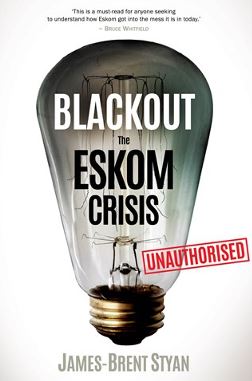
Mr James-Brent Styan, a journalist, has been writing about Eskom since 2008. He was there from the first load shedding and is still writing and tweeting about Eskom today. For those interested to read about Eskom’s journey, their ups and downs along with future predictions, look up the book “Blackout: The Eskom Crisis”.

Capture2

Maybe we could also look at having different suppliers besides just Eskom, have a choice in who we prefer to supply our electricity. In the UK they have “The Big Six Energy Suppliers” namely British Gas, EDF Energy, E.ON, Npower, Scottish Power, and SSE. They have an option to decide who they think would be best suited to them. This might not be such a bad idea. There are also options such as going off the grid etc that one could look into.
The bottom line is, that if the Eskom ship sinks, we all sink. There is no doubt that Eskom must be fixed, but we mustn’t hold our breath that this will happen any time soon. Eskom does seem to have a plan of some sort and have had a wake-up call and are taking drastic steps to ensure this does not happen again, but we have not been given a time frame and most of us don’t trust that Eskom will do as they say.

So I don’t have a clear answer as to whether we will or won’t have to deal with load shedding again, or if there will be a light at the end of this tunnel. All we can do is shed some light on the current situation, it’s then up to you to decide.


To view more Articles, please visit our Leads 2 Business Blog.
If you are interested in becoming one of our subscribers, please visit Leads 2 Business.
To view notes with screenshots on how to use our website, please visit Leads 2 Business Wiki.

About Michelle Crosby

I started my journey at Leads 2 Business in the Directory Department in 2012. I was then promoted to the Private Projects Department in 2014 and was recently promoted to Projects HOD this year.

A Few Quick Tips to Help You Find the Best Tender Resources

66-Blog-Header-A-few-quick-tips-to-help-you-find-the-best-tender-resources

The Most Useful Tools for A Few Quick Tips To Help You Find The Best Tender Resources…

Many businesses in South Africa rely on Tenders as a gateway to landing contracts. To qualify as a bidder, there are requirements that need to be met before tenderers can submit their bids. Another very important aspect of the tender process is knowing where tender notices, and any supporting information or documentation, can be found.

The resources that I am about to tell you about could make your tendering experience much simpler, and more rewarding.


The Construction Industry Development Board (CIDB) – “The role of the CIDB is to facilitate and promote the improved contribution of the construction industry to SA’s economy and society.” – www.cidb.org.za
The law states that contractors are required to register on the CIDB database (Register of Contractors), should they wish to tender for contracts advertised by government establishments.
Clients undertaking construction developments, which are valued at more than R200 000 in the public sector or above R10 million for state-owned entities or private sector contracts, must register their contracts on the CIDB Register of Projects. This guideline excludes home building, as these contracts are regulated by the National Home Builders Regulatory Council (NHBRC)


For entities that wish to tender for contracts, as well as those entities who wish to advertise invitations to submit bids, there are certain requirements (e.g. tax clearance certificate requirements) that need to be followed, and certain documents that need to be completed (e.g. invitation to bid or declaration of interest). These important documents can be found on the eTenderPublication website.


As of 01 April 2016, the Central Supplier Database will be the single source of supplier information for the South African Government. Prospective suppliers who are interested in supplying goods and/or services to the government are encouraged to register on the CSD. Entities’ details will first be assessed, before being added to the database.

To register, please click here.


“The Office of the Chief Procurement Officer (OCPO) will modernise and oversee the South African public procurement system to ensure that the procurement of goods, services and construction works is conducted in a fair, equitable, transparent, competitive and cost effective manner in line with the Constitution and all relevant legislation.” – Kenneth Brown
The OCOP is made up of two functional areas – policy strategy and client support. The OCOP refers to the core principles of behaviour – the five Pillars of Procurement, which are followed in order to uphold the procurement system.

These five pillars are: value for money; open and effective competition; ethics and fair dealing; accountability and reporting; and equity.
Legislation which applies to procurement, as well as standard bidding forms, can be found on the OCOP website.


Saving the best for last, the Leads 2 Business system is certainly one of the most user-friendly, convenient and up-to-date websites for Tender notices. Our tender department works tirelessly to source and publish tender notices for our clients in the construction industry. The notices are conveniently delivered to our clients’ via email at the end of each working day, saving them valuable time and resources. Our “tender ladies” also communicate any changes to the tender details, and follow up on the award information.


I hope that the above-mentioned resources will answer a few of the questions that you might have had about the procurement system in South Africa.

Happy Tendering!


If you are not already subscribed to Leads 2 Business, I would be happy to provide you with more information about the benefits of the system.

Contact me via email (BiancaT@L2B.co.za) or give me a call on +27 33 343 1130.

www.cidb.org.za
www.westerncape.gov.za/public-entity/construction-industry-development-board
secure.csd.gov.za/
ocpo.treasury.gov.za/Buyers_Area/Legislation/Pages/default.aspx
www.l2b.co.za

About Bianca Warwick

I had the privilege of joining the Leads 2 Business content team in January 2012. I work in the exciting Projects department, following the progress of construction developments in KwaZulu-Natal and the Free State.

Top 10 Tendering Mistakes to Avoid

Top 10 Tendering Mistakes to Avoid

65-Blog--Header-The-Top-10-Mistakes-You-Must-Avoid-When-Tendering

What are the Top 10 Tendering mistakes?


Most things in life revolve around the dos and don’ts; the game of tendering is no different. It may seem exciting to push the boundaries in life sometimes but deviating from the requirements when tendering can cost you a valuable tender that your business desperately needs.


There are many examples of tendering mistakes some of which may seem minor or harmless but could cost you a tender. Let’s be pro-active!


Here are the Top 10 Tendering Mistakes to Avoid:


1. Don’t be late – For the Site Meeting or the Closing Date. Mark the dates on your Calendar, set reminders and know where you are going, preferably before and not on the day. Submit the tender with time to spare. Account for things like traffic, unknown locations or any other obstacles that could result in a last minute rush.

2. Site Meeting – Attend and sign the Register. The purpose of a Site Meeting is for you to have a detailed understanding of the tender requirements and is also significant as you will be able to see who else is planning to tender. When evaluating your tender the Client may check whether you attended and if it’s a Compulsory Meeting you will most likely be disqualified. Either way it makes sense to attend to get useful info regarding the tender.

3. Don’t Assume – if you have questions, if you are unsure, if you think something is incorrect or missing, communicate with the relevant contacts and get clarification, chances are you’re not the only one asking. On that note if your tender is unsuccessful ask why so that you can use the information when applying for future tenders.

4. Don’t be Irrelevant – Keep all your answers clear & concise and most importantly relevant.

5. Copies, Copies, Copies – remember to submit the correct number of copies required and keep an extra copy for your own records.

6. Don’t be Untidy – Imagine how frustrating it is for the person evaluating or adjudicating a tender to try and decipher poor handwriting, or make sense of pages which aren’t in order. An organized and legible document creates a positive impression. After all, you want to present your company in the best light and a well presented tender creates the impression that contracts will be handled with the same care and attention to detail.

7. Don’t Misrepresent – Stick to the facts. Don’t make false statements about your company or its ability. A Tender Document is a legal document and therefore enforceable by law. Misrepresentation or unsatisfactory practices could lead to your company being placed on the National Treasury Restricted List. “Some of the common practices that lead to the restriction of suppliers are poor performance, breach of contract, failure to obtain permission to do remunerative work outside of employment, supply of counterfeit products, and collusion.”

8. Follow the Requirements – Meet all the minimum requirements. Go through the requirements carefully ensuring you meet them. Tenders that do not meet the minimum requirements otherwise known as non-responsive are disqualified.

9. Check, Check & Check again – Admittedly not the most exhilarating task but vitally important. Get someone with fresh eyes to check your tender a final time while making sure all the required documents are attached. Be 100% confident that the tender you are submitting is complete and accurate.

10. Delivery Location – Make sure you know exactly where your tender needs to be delivered to, right down to the Tender Box number, before the Closing Day.


Bonus tip:
Keep abreast of the developments in your sector. Subscribe to a service that provides direct, simple access to valuable building and construction information delivered daily directly to your Inbox, thereby ensuring consistent wealth of new business leads. A service which also provides Support Services if you need assistance or have a query. Want to know more? Contact me on SashaA@L2B.co.za


DYK (according to www.getbiz.co.za):
“A bidder must not quote more than R1 million when the bid document stipulates that the bid is an 80:20. This means that proposals cannot exceed R1 million. Bidders must be aware that 90:10 bids, on the other hand, are valued above R1 million, but bid issuers are not allowed to indicate how much they have budgeted for a project. However, bid issuers are required to indicate whether a bid is a 90:10 or 80:20 in terms of the Preferential Procurement Policy Framework Act (PPPFA). So this serves as a good indicator of how much the bid issuer has set aside for the project.”


Sources:
http://www.getbiz.co.za/index.php/biz-news/business-and-economy/82-top-five-mistakes-that-can-cost-you-a-tender

The Business of Tenders

https://www.westerncape.gov.za/tenders/support/tips
http://www.destinyman.com/2015/04/20/10-top-tender-tips-for-small-business-owners/


If you are interested in becoming one of our subscribers, please visit our website.
To view notes with screenshots on how to use our website, please visit our Wiki site.
To view more articles, please visit our blog.

About Sasha Anderson

Millennial Mom + wife living the hash-tag life. Reach out if you want to talk: L2B, social media, construction, technology, marriage, parenting, popular culture and travel. Remember: If You Fail - Fail Forward

What you didn’t realise about the difference between Public and Private Tenders

64-Blog-Header-What-is-the-difference-between-Government-and-Private-Tenders

Public Tenders vs Private Tenders


The difference between public tenders and private tenders is that public tenders are advertised in the public domain and are open to the public, and private tenders aren’t.


Can I go home now?

No.

Right….


The first problem is the terminology. Public vs open, private vs closed etc. I tend to favour “Public” and “Invited” when describing the difference between these two types of tenders. “Private” can be misconstrued. When someone asks me after a “private” tender, my first question is; are they looking for tenders from Private entities (which could be public or invited) or do they mean “invited” tenders? Private entities make use of publicly advertised tenders as well. Not a lot to be perfectly honest, but it is a way for them to freshen up their supply chain. So for the sake of clarity, I’m going to stick to “Public” and “Invited”.

Public tenders are predominately Government. That is literally the entire point of Government Procurement. The Government is spending the “People’s money”, so it better be out in the public domain where everyone and their uncle can have their say. [tweetthis]The five pillars are: Value for Money, Open and Effective Competition, Ethics and Fair Dealing, Accountability and Reporting, and Equity.[/tweetthis]  “Open and Effective Competition” is represented by the public aspect of advertising your tender notices. These tender notices are advertised in newspapers (not for very much longer, apparently), eTenders, Government Tender Bulletin, Provincial Tender Bulletins, Government websites, Provincial websites, Municipal websites and Notice Boards. The information is out there to be found. If you can find it, then you can participate. Anyone can rock up to a site meeting or a tender closing; no one can stop you. However, the award is very much dependent on how you fulfill the specific criteria required. Anyone can play the game, but only the professional and serious have an actual shot at winning. Plus, generally fly-by-nights and chancers are not appreciated or tolerated. So don’t be one of these. Just don’t.


Public tender notices can be advertised by private entities/ companies as well. It isn’t very common, like I said; but it does happen. Most private entities have their own Supply Chain Management Department and processes. This department handles the supply chain process for that company. Does the company need a cleaning company or a new security company? Does the furniture need replacing? Are they considering building a new headquarters? These are the same types of questions that Government has to deal with, but it’s not out there for all to see. The private entities will usually utilise their tried and tested methods that they’ve been using for years. This rarely involves advertising to the public. The most common tool I’ve come across, is the Supply Chain Database. Private companies would have their own database that they maintain. They approach those companies listed, as they would already have a history with that company so there’s a certain sense of trust and expectation of product or service. Private entities, just like Government, do not want to be wasting their time and money on chancers. How do you get listed on a private entity’s database? Ask! Do you have a Supplier Database? Yes, awesome. Who do I send my company details to? What’s the procedure? You will never learn, if you don’t ask.


Unlike public tenders, invited tenders are generally only heard about after the fact. You tend to hear about them from your mates’ brother’s sister-in-law who overhead it at a bar brawl. Like bread crumbs scattered in the wind, and you have to chase them back to the source. Invited tenders are held very close to the chest. This, unfortunately, gives them a bit of a shady reputation. Not necessarily the case, since companies nowadays have time considerations and budgets that don’t really allow for un-invited delays and inclusions. The sad fact is, if you weren’t invited; then be prepared to be bounced from the party.


Government utilises invited tenders as well. Which is a neverending source for debate and scandalous speculation. When it’s all on the up and up, simply time and money are against going out to public tender. For example: an Emergency. When an actual emergency occurs, say a natural disaster, nobody is going to tolerate the Government or a Municipality going out to public tender. Why? It takes too long. So tenders are invited. Where would the contractors be sourced from, you ask? The applicable Supplier Database. Verbal quotes, or more likely written quotes are called for. In emergencies, the aim is to fix the problem as quickly and efficiently as possible to prevent further issues. Bear in mind, that all decisions related to this situation would have to be recorded. All decisions concerning Supply Chain Management, have to be recorded. Otherwise, a certain word starts surfacing “misappropriation”.


It’s also interesting to note, that “lack of planning” does not constitute an emergency. If suddenly a pen cannot be found in your Municipality for love nor money, then this is not an emergency but terrible terrible planning. It’s pencils for you, until the tender can be awarded.


Invited tenders can be the chosen form of procurement when specialty works or products are required. Supply Chain Departments are supposed to have an idea of who can do what for them. It they know that there’s stacks of suppliers of a certain product, then it’ll be open competitive bidding for them. But if they know there’s only two companies that can supply a certain product, it’s not viable to go out to public tender. Both companies are invited to tender, and one is awarded. There’s cases where there’s only one supplier/ contractor. That guy gets asked to price. It’s too costly and too time consuming to go out to public tender, when you already know who your suppliers could be. This actually implies that there’s a bit of common sense being utlilised in the Government. Someone actually hoped to save money and time, by not relying on mindless bureaucracy. Treasury Regulation 16A6.4 comes into play, but it has to be recorded and reported. Everything has to be recorded and reported.


Invited tenders can also be the result of other supply chain processes: Panels, Pre-Qualifications and Expression of Interests (EOI). These are the most common. Think of it as a gathering of potential suppliers/ contractors. They are assessed and then invited to tender. Generally, the pre-qualification/ EOI are out in the public domain. But the invited tenders will be behind the scenes. I tend to see these for long term projects, where a certain aim is hoping to be achieved. The idea being that if the Government wants to refurbish an entire Province’s schools (for example), then going out to tender for each individual school is just nuts. Get a group of potential pre-qualified contractors together in one go, and then divvy the jobs out as budgets and time allows.


When hoping to do business, hedge your bets.


If you want to work with a private company, talk to them. If you want to continue working with the Government, talk to them as well. Whether it’s public tender notices or invited, information is key.


http://www.treasury.gov.za/legislation/pfma/supplychain/General%20Procurement%20Guidelines.pdf

http://www.treasury.gov.za/divisions/ocpo/sc/Guidelines/SCM%20Jan900-Guidelines.pdf


About Claire Donaldson

I started working at Leads 2 Business in February 2005, and have served as Head of Department of Daily Tenders from 2007 until the present. I oversee both the Daily Tenders South Africa and Africa Departments.

The Twitter beginners guide to Tender Influencers

Leads 2 Business : Twitter influencers

So how do you become the McGuyver of Twitter Tender influencers?


No, I am no guru of the Twitterverse, but I spend a bit of time using it. As far as social goes I can operate with a fair amount of ease on some social media platforms. But it still takes time to find your feet and potentially find the information you are looking for. So today’s tip would be how to find useful Tender tweeps to follow on Twitter.  They may or may not be tendering themselves, but have knowledge or report on topics or factors that effect Tendering or the Construction industry.

Now I am sure that everyone has their own list on Twitter with their favourites, and this one is by no means exhaustive. This is a BEGINNERS guide. So, hu erm, with no further adieu….


Step one would be to start at the beginning…. have Twitter loaded on your desktop, tablet or smartphone. If you are at a loss, you can click this link to the Twitter App and be directed to Google Play to download it. Then get yourself versed on using this microblogging tool quickly on either YouTube or by getting the lowdown from a social media leader like Mashable.

So you are up to speed. Easier than you thought right!?!


For keeping in the know about what is happening in the Construction industry on the continent:


@BusinessNewsCT

@ConstrucReview

@busrep

@concretetv

@ConstWorldSA

@EngNewsZA

@justmobility


Some International Construction Companies that are an influence on the Industry on Twitter:


@TenderManageLtd

@Tenders_Unltd

@Venturesonsite

@RFPConstruction

@ToyotaEquipment

@CMnewsandviews

@BuildMomentum

@TenderSoko

@iTenderPtyLtd


Some Construction Industry bodies:


@The_CESA

@SaiaArchitects

@YPFSouthGauteng

@SANRAL_za

@saice_civil

@ewbukzn


Some influential Tweeps:


@MHLUNGUOLUHLAZA

@JoubertBotha

@markperera

@DazMSmith

@brianmawdsley

@RichSimmonds


Well, there is your starting point. An easy one at that. This will help give you a foundation to begin with until you learn more about Twitter and find more interesting tweeps to follow. Please let me know who you find that is interesting … always good to meet new people.


Until then, see you in the Twitterverse at @L2Bcoza.


About Carmen Barends

Social media adventurer for Leads 2 Business, exploring new frontiers and taking new ground. “Not all those who wander are lost.” JRR Tolkien

A day in the life of a Tenders Researcher

Leads 2 Business : A day in the life of a Tenders Researcher

2 Metaphors for a Tender Researchers day


The first instinct when faced with the task of describing “A Day in the Life of a Researcher” is to list the various tasks and duties that have to be done throughout the day, and the week, the month and the year. The fact that the light slowly drains from my brother’s eyes when I waffle about my day, is a clear indication that this might not be the best approach. It’s not that he doesn’t care about what I do (I pay his bills, so he has a vested interest), it’s that the “how” has no context for someone on the outside. The usual follow up question is “It got done, right?” is a clear indication that the “how” is not as important as the end result.


“Researcher Sympathy” only comes from other researchers. Like “Accountant Sympathy” only comes from those who inhabit the daunting world of debits and credits. How long can you feign interest in that?


No one on the “outside” really cares how many phone calls you made, or how many people you had to speak to and introduce yourself to and state your purpose to and how far you had to stretch the definition of “polite and professional” for the information that is our bread and butter. If you aren’t in the trenches with us, then you can’t really understand the perseverance required sometimes. And if you’ve been nodding your head knowingly through that last sentence, then I hate to break it to you; but you are a Researcher. How many times today have you spelt “L-E-A-D-S, like leading someone”?


I reread my blog article “Understanding Awards” from 29 October 2014 for some sort of inspiration, and I’m happy to announce, nothing has changed. The same challenges and concerns, the same misapprehension and suspicion we faced back then is alive and well today. So how do I convey the energy spent and the time taken, without boring the life out of you or utilising the “humblebrag”.


[tweetthis]Our business is information. Fast and accurate information. [/tweetthis]This information takes the form of leads or doorways of opportunity, as you will. We present it, and our subscribers run with it.


Think of our day like a race.

There’s a starting point and an end (metaphorical because, especially on a Friday, it definitely feels like it will never end). And all along the way there’s certain checkpoints that have be reached and ticked off the list. Tender notices are meant to have a certain regularity to them. The Government Tender Bulletin is published each Friday, for example. If we don’t reach these checkpoints, we have to go in search of them or keep coming back until we can tick them off the list.

Think of it like an Easter egg hunt, where someone is constantly hiding Easter eggs.

Doesn’t tell you how many eggs there are but assures you that they are in fact out there. And sometimes hides the eggs in the same place that you’ve already searched over and over again at irregular intervals. And your phone won’t stop ringing while you are searching for these eggs, and some of the eggs are cracked. And then there’s Scam eggs. And you get the picture.


This race (I’m mixing my metaphors) is not a straight line, but a circle. It just starts again. And on the information ride, there’s nowhere to get off. These checkpoints can represent anything really. They are the newspapers we buy (maybe not for much longer according to National Treasury) and the websites we check. They’re the telephone calls and emails needing to be answered. They are our current subscribers and potential subscribers. They are the tender awards and award follow ups. Illusive site registers, bidder’s list, bills of quantity and tender documents.


It’s a bizarre balance between maintaining routine and consistency and then trying to adapt to the unexpected. Anything can throw a spanner in the works, from Municipal strikes to newspaper delivery to a slow internet connection. The balance between expectation and reality. It’s only experience and willingness that has taught us how to deal with these bumps in the road. The metaphorical duck on water comes to mind. Except the duck has developed Carpal Tunnel Syndrome and an unhealthy obsession with internet speed.


The long and the short of it is, that we deliver.


You don’t have to worry about the “how” because we’ve got that covered.

About Claire Donaldson

I started working at Leads 2 Business in February 2005, and have served as Head of Department of Daily Tenders from 2007 until the present. I oversee both the Daily Tenders South Africa and Africa Departments.

How Projects in Africa works for Businesses

Leads 2 Business:The Outlook for African Projects


The Hopeful Continent


Africa has been looked down-upon for many years in terms of our Economy and Industrialisation standards. The Good News? There is now a major change to the biased view of Africa as a whole. Africa is now seen as the “Hopeful Continent”.

[tweetthis]Africa contains 54 countries, over 200 different languages and more than 3000 various ethnic groups. Africa is truly what is known as the Rainbow Nation.[/tweetthis]

Leads 2 Business : Rainbow nation


Did you know that our countries landmass is larger than that of North America, India & West Europe combined!


Leads 2 Business : Bean

We are the second largest continent after Asia, Africa supposedly has an annual infrastructure deficit of $100 billion.

Yet there are millions of dollars that is spent into Africa-based Infrastructure Projects on a yearly basis. Yet who is actually funding the continents infrastructure spending?


The collective support provided by the development finance institutions (DFI’s) and export credit agencies is that enabler. Such Institutions as the World Bank, the African Development Bank (ADB) and the Development Bank of South Africa (DBSA) have over 6.7% of the funding which is provided by them. The Infrastructure Consortium for Africa (ICA) has estimated that $44 billion was utilised for projects all over Africa in 2013. The Private sector, was estimated to be only $9 billion in this last year. So the question really is – Why are DFI’s popular for funding compared to the capital markets? This could be due to them having A-grade credit rating and are unencumbered by regulations and that they play a role when commercial players are constrained.

Leads 2 Business : Colin Coleman


Our country is on a multi-billion rand development drive to fix the misrepresented implementation of infrastructure from our past and to continue to improve by meeting the demands of our growing economy.

Infrastructure spend for Sub-Saharan African countries is expected to reach $180 billion per annum by 2025! Companies such as Transnet have made progress in issuing bonds to raise capital. Transnet had raised R1.5 billion, using a 5 year bond through its Domestic Medium Term Note Programme. The African Development Bank and EU launched the Infrastructure Investment Programme for South Africa (IIPSA) in 2014. Its intention was to provide innovative and alternate funding to organisations that wished to take out infrastructure projects in SA or projects across two or more borders of the SADC member countries. If these infrastructure developments are to succeed, then it is abundantly clear that any and all corruption needs to be dealt with and with a zero tolerance policy.


Leads 2 Business : Primary reason for delays

Sub-Saharan Africa’s growth is projected at an average of 3.7 percent in 2015 down from 4.6 percent in 2014. However, despite the obvious slowdown of Africa’s largest economies, the Gross Domestic Product (GDP) in the region is expected to pick up to an average of 4.4 percent and 4.8 percent in 2016 and 2017 respectively. Lower prices for fuel is expected to contribute to lower inflation in the oil importers, which will help boost the consumers’ purchasing power and support domestic demand. The price level impact of currency depreciation could, however, offset some of these effects. Remittance inflows is expected to pick-up up gradually in 2016–17.


So the outlook and prospective improvement for infrastructure and building developments for Africa and South Africa is looking significantly brighter than in recent years. We are still having issues with the implementations and the organisation behind projects. Our biggest problems are our internal struggles. However, it seems that new and improved systems are being implemented to greatly improve our countries growth.


Here are a few note worthy developments on infrastructure and building developments in Africa that we are proud to showcase on Leads 2 Business!!


Tunisia Economic City, Tunisia, North Africa – This is a whole new city proposed to be built in Tunisia. This is a huge mixed-use development, the biggest of it’s kind in the whole of Africa!
PPA 15699 – 15712

Jazeera Estate – Somalia – Conceptual – The first mixed used development to be built in Somalia.  PPAs 17621 – 17628

Eco-Medical Estate, Ghana – A whole medical village with it’s own shopping mall in Ghana, West Africa.  PPAs 17436 – 17444

The Gate, Egypt, Design – This is a very exciting mixed use development in Nigeria, already underway. Land was reclaimed from the sea in order to built this development.  PPAs 15262 – 15266

Tatu City, Kenya, East Africa – Underway – Another big mixed use development in Kenya already underway.  PPAs 9492 – 9499

Pearl Marina, Uganda, Infrastructure – Underway, PPAs 12677 – 12681.

About George Harris

I started my incredible journey at Leads 2 Business in 2006. I am the Content Director, custodian of an amazing research team responsible for unearthing hidden gems of information.

Mine! Mine! Mine!

posted in: Uncategorized 0


Mine1


So….here we are… 2016…. and how’s it going?

To be perfectly honest this year has already started to kick my butt all over the place, some good …. some badish, but mainly just so much change, and even more prospect of change, but don’t get me wrong, [tweetthis]I love change just as much as the next butterfly, but man it’s exhausting!!![/tweetthis]


But here, here is something that hasn’t change…. My knowledge about African Mining!! lol! Yip and this is what I am blessed to be blogging about today! Buckle up friends, its going to be a “blast”… get it? Blast? Mining? ye…..


African Mining


Anyhoo, here is the “411” on Mining in general right now…. we may get to Africa later… hopefully!

Well as I write this, the biggest mining gathering in the world has just taken place, More than 6,000 delegates from 100 nations gathered at the Mining Indaba in Cape Town , from the 8th – 11th Feb 2016.

large_ba888069_7fc2_74b9_38d2_1cd4456c5247


Why? Well, with commodity prices plummeting as they are, the struggle to retain or obtain foreign investment is a real one  #TheStruggleIsReal

Let me start by saying….The feeling is not good thus far.

[tweetthis]In South Africa alone 47,000 jobs were lost between 2012 and 2015.[/tweetthis]

Half of the coal mines and iron ore mines and 80% of the Platinum industry is losing money – not exactly a good investment for anyone I’m afraid.

I found this very interesting and really just horrifying! …..South Africa is ranked number 11th in Africa as one of the “most attractive investment countries”?????  What? am I the only one who feels like we should be number 1!?!


One of the Presentations of the Indaba came as a “bail out plan”, and was presented by 474615293 Nikolai Zelenski, Chief Executive Officer of Nordgold, he claims Nordgold has a Proven Strategy in a Lower Price Environment.

nordgold

So Who is Nordgold?

“Nordgold (LSE: NORD) is an internationally diversified low-cost gold producer established in 2007 and publicly traded on the London Stock Exchange. The Company has expanded rapidly through carefully targeted acquisitions and organic growth, achieving a rate of growth unmatched in the industry during that period. In 2015, Nordgold produced 950 thousand ounces of gold. The Company operates 9 mines and has 2 development projects, 4 advanced exploration projects and a diverse portfolio of early-stage exploration projects and licenses in Burkina Faso, Guinea, Russia, Kazakhstan, French Guiana and Canada. Nordgold employs more than 8,000 people.”

Now to be perfectly honest with you, I don’t have what it takes to break down and unpack a strategy of this magnitude to anyone, so I’m not even going to try, but I do know how to copy and paste, so go wild;)

www.nordgold.com/investors-and-media/presentations/


Mining in Africa… well here it is, I have searched high and low and here is the low down….

Commodities dropped sharply last year, and news from Matthew Davies of BBC Africa is that there will be no recovery this year, he reported that In Zambia, the country’s main export, copper, now sells for less than half than it did just three years ago, now my math is not great, but that sounds terrible!!!

And I’m right because some mining companies have even halted production all together and miners are losing their jobs at the rate of knots.

This has led to a plunge in the currency, and a rise in inflation which is expected to continue…….

And as fate would have it several other African countries are in the same boat, including big oil producers like Nigeria and Angola!

[tweetthis]I’m starting to think mining is at fault for everything bad in my life![/tweetthis]

Ridiculous Avo prices, cellulite and rising fuel prices!…. I know they are at fault for at least one of those.rolling eyes


But I am an eternal optimist, romantic and impossible dreamer, so I believe the cellulite will pass…. lol! no really, I have hope that yes, maybe not this year, but in the future our Mining economy will rise once more, the fact that people are talking about it, must mean it’s important and is being made a priority so I will not need to fret another moment about this!

Relief, the pressure was really getting to me!


But apparently pressure in the mining industry is a good thing…. fbfffaa05b0bec0317176754817d40f8


Well this has been real… thanks. If you find the time and want to get in touch with any of the mining projects we currently following at

Leads 2 Business, please feel free to contact myself, SherinaS@L2B.co.za or Support@L2b.co.za and we will be more than happy to oblige!


I look forward to hearing from you 😉


About Sherina Shawe

I am a strong believer in "What you put in , is what you will get out" and this drives me every day, whether it's at home with my gorgeous family or at work where I get to fuel my competitive spirit. I love who I am and who I'm becoming. I love where I am , but more importantly where I'm going.... #EternalOptimist #Aspire2Inspire

1 2 3 4 5