How Projects in Africa works for Businesses

Leads 2 Business:The Outlook for African Projects


The Hopeful Continent


Africa has been looked down-upon for many years in terms of our Economy and Industrialisation standards. The Good News? There is now a major change to the biased view of Africa as a whole. Africa is now seen as the “Hopeful Continent”.

[tweetthis]Africa contains 54 countries, over 200 different languages and more than 3000 various ethnic groups. Africa is truly what is known as the Rainbow Nation.[/tweetthis]

Leads 2 Business : Rainbow nation


Did you know that our countries landmass is larger than that of North America, India & West Europe combined!


Leads 2 Business : Bean

We are the second largest continent after Asia, Africa supposedly has an annual infrastructure deficit of $100 billion.

Yet there are millions of dollars that is spent into Africa-based Infrastructure Projects on a yearly basis. Yet who is actually funding the continents infrastructure spending?


The collective support provided by the development finance institutions (DFI’s) and export credit agencies is that enabler. Such Institutions as the World Bank, the African Development Bank (ADB) and the Development Bank of South Africa (DBSA) have over 6.7% of the funding which is provided by them. The Infrastructure Consortium for Africa (ICA) has estimated that $44 billion was utilised for projects all over Africa in 2013. The Private sector, was estimated to be only $9 billion in this last year. So the question really is – Why are DFI’s popular for funding compared to the capital markets? This could be due to them having A-grade credit rating and are unencumbered by regulations and that they play a role when commercial players are constrained.

Leads 2 Business : Colin Coleman


Our country is on a multi-billion rand development drive to fix the misrepresented implementation of infrastructure from our past and to continue to improve by meeting the demands of our growing economy.

Infrastructure spend for Sub-Saharan African countries is expected to reach $180 billion per annum by 2025! Companies such as Transnet have made progress in issuing bonds to raise capital. Transnet had raised R1.5 billion, using a 5 year bond through its Domestic Medium Term Note Programme. The African Development Bank and EU launched the Infrastructure Investment Programme for South Africa (IIPSA) in 2014. Its intention was to provide innovative and alternate funding to organisations that wished to take out infrastructure projects in SA or projects across two or more borders of the SADC member countries. If these infrastructure developments are to succeed, then it is abundantly clear that any and all corruption needs to be dealt with and with a zero tolerance policy.


Leads 2 Business : Primary reason for delays

Sub-Saharan Africa’s growth is projected at an average of 3.7 percent in 2015 down from 4.6 percent in 2014. However, despite the obvious slowdown of Africa’s largest economies, the Gross Domestic Product (GDP) in the region is expected to pick up to an average of 4.4 percent and 4.8 percent in 2016 and 2017 respectively. Lower prices for fuel is expected to contribute to lower inflation in the oil importers, which will help boost the consumers’ purchasing power and support domestic demand. The price level impact of currency depreciation could, however, offset some of these effects. Remittance inflows is expected to pick-up up gradually in 2016–17.


So the outlook and prospective improvement for infrastructure and building developments for Africa and South Africa is looking significantly brighter than in recent years. We are still having issues with the implementations and the organisation behind projects. Our biggest problems are our internal struggles. However, it seems that new and improved systems are being implemented to greatly improve our countries growth.


Here are a few note worthy developments on infrastructure and building developments in Africa that we are proud to showcase on Leads 2 Business!!


Tunisia Economic City, Tunisia, North Africa – This is a whole new city proposed to be built in Tunisia. This is a huge mixed-use development, the biggest of it’s kind in the whole of Africa!
PPA 15699 – 15712

Jazeera Estate – Somalia – Conceptual – The first mixed used development to be built in Somalia.  PPAs 17621 – 17628

Eco-Medical Estate, Ghana – A whole medical village with it’s own shopping mall in Ghana, West Africa.  PPAs 17436 – 17444

The Gate, Egypt, Design – This is a very exciting mixed use development in Nigeria, already underway. Land was reclaimed from the sea in order to built this development.  PPAs 15262 – 15266

Tatu City, Kenya, East Africa – Underway – Another big mixed use development in Kenya already underway.  PPAs 9492 – 9499

Pearl Marina, Uganda, Infrastructure – Underway, PPAs 12677 – 12681.

About George Harris

I started my incredible journey at Leads 2 Business in 2006. I am the Content Director, custodian of an amazing research team responsible for unearthing hidden gems of information.

Mine! Mine! Mine!

posted in: Uncategorized 0


Mine1


So….here we are… 2016…. and how’s it going?

To be perfectly honest this year has already started to kick my butt all over the place, some good …. some badish, but mainly just so much change, and even more prospect of change, but don’t get me wrong, [tweetthis]I love change just as much as the next butterfly, but man it’s exhausting!!![/tweetthis]


But here, here is something that hasn’t change…. My knowledge about African Mining!! lol! Yip and this is what I am blessed to be blogging about today! Buckle up friends, its going to be a “blast”… get it? Blast? Mining? ye…..


African Mining


Anyhoo, here is the “411” on Mining in general right now…. we may get to Africa later… hopefully!

Well as I write this, the biggest mining gathering in the world has just taken place, More than 6,000 delegates from 100 nations gathered at the Mining Indaba in Cape Town , from the 8th – 11th Feb 2016.

large_ba888069_7fc2_74b9_38d2_1cd4456c5247


Why? Well, with commodity prices plummeting as they are, the struggle to retain or obtain foreign investment is a real one  #TheStruggleIsReal

Let me start by saying….The feeling is not good thus far.

[tweetthis]In South Africa alone 47,000 jobs were lost between 2012 and 2015.[/tweetthis]

Half of the coal mines and iron ore mines and 80% of the Platinum industry is losing money – not exactly a good investment for anyone I’m afraid.

I found this very interesting and really just horrifying! …..South Africa is ranked number 11th in Africa as one of the “most attractive investment countries”?????  What? am I the only one who feels like we should be number 1!?!


One of the Presentations of the Indaba came as a “bail out plan”, and was presented by 474615293 Nikolai Zelenski, Chief Executive Officer of Nordgold, he claims Nordgold has a Proven Strategy in a Lower Price Environment.

nordgold

So Who is Nordgold?

“Nordgold (LSE: NORD) is an internationally diversified low-cost gold producer established in 2007 and publicly traded on the London Stock Exchange. The Company has expanded rapidly through carefully targeted acquisitions and organic growth, achieving a rate of growth unmatched in the industry during that period. In 2015, Nordgold produced 950 thousand ounces of gold. The Company operates 9 mines and has 2 development projects, 4 advanced exploration projects and a diverse portfolio of early-stage exploration projects and licenses in Burkina Faso, Guinea, Russia, Kazakhstan, French Guiana and Canada. Nordgold employs more than 8,000 people.”

Now to be perfectly honest with you, I don’t have what it takes to break down and unpack a strategy of this magnitude to anyone, so I’m not even going to try, but I do know how to copy and paste, so go wild;)

www.nordgold.com/investors-and-media/presentations/


Mining in Africa… well here it is, I have searched high and low and here is the low down….

Commodities dropped sharply last year, and news from Matthew Davies of BBC Africa is that there will be no recovery this year, he reported that In Zambia, the country’s main export, copper, now sells for less than half than it did just three years ago, now my math is not great, but that sounds terrible!!!

And I’m right because some mining companies have even halted production all together and miners are losing their jobs at the rate of knots.

This has led to a plunge in the currency, and a rise in inflation which is expected to continue…….

And as fate would have it several other African countries are in the same boat, including big oil producers like Nigeria and Angola!

[tweetthis]I’m starting to think mining is at fault for everything bad in my life![/tweetthis]

Ridiculous Avo prices, cellulite and rising fuel prices!…. I know they are at fault for at least one of those.rolling eyes


But I am an eternal optimist, romantic and impossible dreamer, so I believe the cellulite will pass…. lol! no really, I have hope that yes, maybe not this year, but in the future our Mining economy will rise once more, the fact that people are talking about it, must mean it’s important and is being made a priority so I will not need to fret another moment about this!

Relief, the pressure was really getting to me!


But apparently pressure in the mining industry is a good thing…. fbfffaa05b0bec0317176754817d40f8


Well this has been real… thanks. If you find the time and want to get in touch with any of the mining projects we currently following at

Leads 2 Business, please feel free to contact myself, SherinaS@L2B.co.za or Support@L2b.co.za and we will be more than happy to oblige!


I look forward to hearing from you 😉


About Sherina Shawe

I am a strong believer in "What you put in , is what you will get out" and this drives me every day, whether it's at home with my gorgeous family or at work where I get to fuel my competitive spirit. I love who I am and who I'm becoming. I love where I am , but more importantly where I'm going.... #EternalOptimist #Aspire2Inspire

Understanding the Tender Process in Africa


Leads 2 Business : Understanding the Tender Process in Africa


Understanding the African Tender Process is not much different from the South African Tender process (see link to previous blogs referencing SA Tender Process).


In general, tendering follows the following (simplified) process:

  1. A need for a service is identified.
  2. Approval is obtained from the necessary entities.
  3. Documentation (including Bid Documents, BoQ, Drawings, Specifications, etc.) is prepared and approved.
  4. Advertising of Tenders.
  5. Receipt and opening of tenders.
  6. Evaluation of Bids.
  7. Awarding of Bids

Procurement can be achieved via the following methods:

Single Source (also referred to as Direct Contracting), Requests for Quotations (RfQ’s), Two-Stage Tendering, Request for Proposals (RfP’s), Restricted Tendering, Open Tendering, Prequalified Tenders. (For an explanation of the methods, please see http://procurementclassroom.com/procurement-methods/).

Of course, each country will have its own Public Procurement Regulations, rules and laws that govern the procurement process. Furthermore, each institution may have its own policy that is applied over and above the country’s regulations. Each advertisement will identify the forms and documents that will be required for that specific bid.

Some things to bear in mind specific to understanding the African Tender Process are the following:

There might be language barriers: depending on which country is advertising the bid, it might be advertised in another language (not English). Some bids will include a copy of the bid documentation which has been translated to English, but in the cases where they do not provide translated documents, it might be necessary for a translator.

When needing to contact the specific institution, ensure that you have the right dialing code for the country you are trying to contact.

It might be easier to communicate via email and this will ensure that there is also a paper trail of any queries raised and answered, in which case, the correct email address is a necessity.


[tweetthis]Communication with the right people and always confirming the details is essential.[/tweetthis]


For some tips on tendering, please have a look at the following articles:

http://www.miningreview.com/tender-process/

http://www.esi-africa.com/tender-process-17196/

About Cecile Van Deventer

I joined the L2Q Team in 2006, as a L2Q Support Assistant and have been the HOD since 2010. I supervise L2Q Bills, Daily Tender Bills, Control Lists and Directory.

Giving it Horns: Social Responsibility to Rhino’s

Giving it Horns: Social Responsibility to Rhino’s

Leads 2 Business : Social responsibility - giving it horns

To start off our 2016 Blog Journey we’re ‘Giving it Horns’ in the form of Social Responsibility to Rhino’s.


I’m sure most of us are aware of issues surrounding Rhino poaching and the fact that these beautiful animals are on the brink of extinction but what are you as an individual or company doing in response to these threats? Are you Socially Responsible to Rhino’s?


Did you know?

World Rhino day is on 22 September

The full name for Rhino is actually Rhinoceros

There are 2 species of African Rhino (White & Black)

[tweetthis]Rhino’s can gallop up to 48 km’s per hour[/tweetthis]

The Black Rhino population has decreased by 97.6% since 1960

[tweetthis]The Rhino’s current conservation status is Critically Endangered[/tweetthis]

Rhino’s have poor eyesight

Rhino’s have a Life Span of 35 to 40 Years

Rhino’s are considered ‘Mega-Herbivores’

A Rhino’s Gestation is 16 Months

1kg of Rhino horn can fetch up to 1 million rand or more

[tweetthis]Adult Rhino’s have no natural predators, except for man[/tweetthis]


What does it mean to be Socially Responsible?

Social Responsibility means that people and companies behave with ethical sensitivity toward social, cultural, economic and environmental issues. The benefits of being socially responsible are a positive impact on development, business and society ultimately leading to a better future.


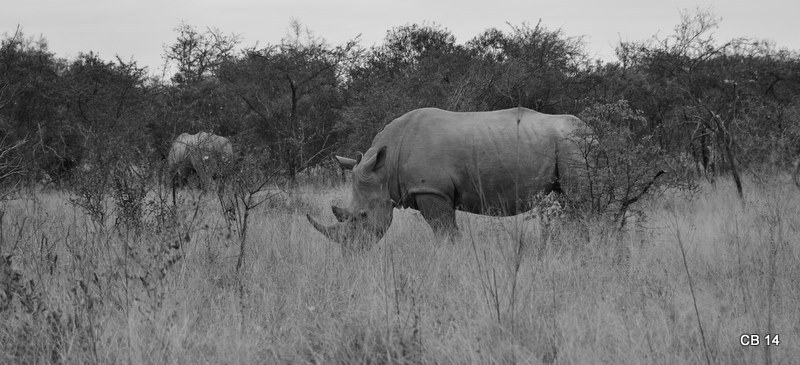
Leads 2 Business : Photo Cred : Carmen Barends


Why become Socially Responsible to Rhino’s?

  • Conservation – When Rhino’s are protected, many other species (birds, reptiles, fish, insects and vegetation) that interact with Rhino’s are also protected.
  • Tourism – In the wild, Rhino’s attract tourists as they are one of the “Big Five”. Eco-tourism relies on tourists wanting to see the Big 5 which would be 4 without the Rhino.
  • Educate & Spread Awareness – The more people learn and spread their knowledge about Rhino’s, the better it will support the cause.
  • Eco-system Balance – Everything revolves around balance and all species are intricately connected. Rhino’s being ‘mega-herbivores’ fulfill many important roles in the ecosystem. Rhino’s eat an average of 23.6 kg a day and their dung piles can be 5 meters wide and 1 meter deep. That’s a large amount of trimming and fertilizing!


How to become Socially Responsible to Rhino’s?

  • Get Social about your concern for the Rhino’s. The more people who highlight the cause the more it will lead to initiatives to protect, save, prevent and secure the survival of our Rhino’s. It’s as easy as: read, share and comment.
  • Interact with Government and local Wildlife Conservation Organizations and put pressure on them to advocate Rhino Conservation and Laws that can contribute to the cause. When traveling share your concerns with local travel agencies and encourage them to do the same with Government and Tourism Organisations.
  • Volunteer for Rhino Conservation Organisations. Web Links can direct you to volunteer opportunities.
  • Donate to your Rhino Conservation Organisation. Pick Organisations where 100% of your donation goes to save Rhino and is not diluted by admin fees and other sundries.
  • Get involved with local Fund Raising activities that donate proceeds to Rhino Conservation.
  • Support Companies who support Rhino’s like Leads 2 Business. As a socially responsible individual you can demand that companies become more socially responsible by supporting companies who are already socially responsible.


However you show your Social Responsibility to Rhino’s, make sure you Give it Horns!


Help Leads 2 Business raise awareness: Check out our Heart of a Ranger video here. Like, comment, share, re-tweet.


Leads 2 Business : Social responsibility - giving it horns


Further Reading:


http://www.worldwildlife.org/species/Rhino

http://www.worldwildlife.org/pages/Rhino-facts-and-species

http://www.stopRhinopoaching.com/statistics.aspx

http://www.news24.com/Africa/Zimbabwe/surge-in-poaching-sees-50-zimbabwe-Rhino’s-killed-20160110

http://www.earthtouchnews.com/environmental-crime/illegal-trade/top-10-shocking-figures-of-the-illegal-Rhino-horn-trade

http://www.expressoshow.com/articles/10-Realistic-Ways-To-Save-The-Rhino?articleID=4090

http://www.nikela.org/7-ways-you-can-help-save-the-Rhino-even-if-you-don%E2%80%99t-live-in-south-africa/

To view more articles, please visit our blog.

About Sasha Anderson

Millennial Mom + wife living the hash-tag life. Reach out if you want to talk: L2B, social media, construction, technology, marriage, parenting, popular culture and travel. Remember: If You Fail - Fail Forward