Profile of a Green Building

Green Building


Buildings play a huge role in addressing environmental concerns. They contribute around 40% of global greenhouse gas emissions and the same proportion of waste. Unfortunately South Africa is in the top 20 list of worst offenders.

Green building is essential because we are running out of resources. We live in a time of global climate change challenges, increasing regulatory pressures for greater energy efficiency and carbon reduction, consumer interest, and employee pressure on corporations.

A green building can be thought of as a living organism, and as with all living things, it must have a nurturing environment to achieve sustained health and performance over its life. Such buildings are designed for economic and environmental performance over time, with an appreciation for unique local climate and cultural needs, ultimately providing for the health, safety, and productivity of building occupants. Architectural, systems, and end-use design, coupled with continual care and monitoring, lead to lower energy use, reduced CO2 emissions, and focused environmental stewardship while providing long term value to the community, building occupants, and building owners. Triple bottom line benefits can be expected—measurable benefits for people, profit, and the planet.

The energy dilemma is here to stay. Our planet faces an unprecedented energy challenge, with global energy demand growing faster than current production capacity, resulting in diminishing supplies and increasing prices. By 2050, energy demand will double in order to keep pace with demographic, economic, and industrial growth throughout the world. Within this same timeline, we must cut in half the amount of carbon gas emissions compared to 1990 levels to avoid the dramatic consequences of climate change that will affect every citizen, business, and country.

Working environments have a significant impact on employee productivity, and green buildings offer better day lighting, outdoor views, and indoor air quality for occupants to enjoy. These features of a healthy work environment help to attract and retain employees. Moreover, occupant comfort and satisfaction reduces sick time, improves workplace occupancy rates (office spaces are typically unoccupied 30% of the time) and most importantly, improves productivity.

The new Group Five Head Office within the Waterfall Commercial Business Park located midway between Pretoria and Johannesburg is a good example of a Green Building in South Africa.

The sustainable building features include:
• 70% of all demolition and construction waste was recycled or reused.
• 80% of the office UA has access to views of the outdoors
• Low Volatile Organic Compounds (VOC) paints, carpets and sealants have been specified and low formaldehyde composite timber products will be used in the shop fitting.
• Water saving is achieved by capturing rainwater for reuse within the building
• 50% of the timber is specified to be either Forest Stewardship Council Certified, reused or to have a post-consumer recycled content.
• The site will develop a watercourse protection plan to ensure that there is no degradation of the Jukskei River as a result of activities from the Group Five site.

Project floor areas of the Group Five site : Total gross floor area (GFA) 39 617m², total commercial office area 24 661m² and car parking area 27 539m². This office building achieved 5 Star Green Star SA – Office v1 Design Rating in December 2013.

These are ten points (in no particular order) that green buildings are already doing in different parts of the world:
1. Green buildings can command rents as much as 10% above the norm.
2. Green buildings improve productivity.
3. Green buildings show respect for the people who use them.
4. Green buildings raise the quality and standard of buildings generally.
5. Green buildings inspire innovation.
6. Green buildings encourage learning about what works and what doesn’t.
7. Green buildings can help electricity utilities by reducing peak demands.
8. Green buildings raise awareness of what constitutes a high quality environment.
9. Green buildings can trade energy
10. Green buildings present exciting new challenges for environmental stewardship.

So that’s the list. You may have noticed the absence of the most obvious benefit of a green building: its reduced environmental impact. But since that is, in essence, what a green building is all about, it goes without saying.

Sources:
https://www.gbcsa.org.za/projects/certified-projects/
http://www.envirocitizen.org/article/green-building:-what-is-it-and-why-do-we-need-it/6038.html
http://www.carbonsmart.com/carboncopy/2008/11/top-ten-reasons-why-we-need-green-buildings.html
http://www.l2b.co.za/Projects/Project/View?ID=884d1819-3b2e-409e-883f-6640eebe2346

About Debbie Wessels

I started at Leads 2 Business in April 2008 in the tenders Department and transferred to the Projects Department during the same year. I was appointed Head of Department for Projects from February 2011 to March 2022. April 2022 I started a new adventure as Content Regulator.

The Effect of Inclement Weather on Construction

posted in: How To 0

The Effect of Inclement Weather on Construction

The completion of a project depends just as much on the weather as on the contractor’s rate of work.

Most projects have standard Main Contract Conditions, i.e. JBCC, NEC or FIDIC contracts, and construction programme periods which outline the conditions for any inclement weather claims the contractor might need to submit for a specific project. Then, there might be other employers who have their own additional conditions as well.

It also does not just depend on the days when it is raining, but also on the days following the rain, as the working conditions won’t allow normal activity for safety reasons, due to excess water or muddy conditions, etc. Strong winds can also prevent construction from taking place.

Different provinces will have their own specific rainfall patterns, and contractors in the provinces will be aware of these, however, each construction site is to keep daily weather records which include rainfall meter and/or wind speed meter.

So, the question is, are contractors able to depend on weather sites and/or reports to predict the days that they will not be able to continue construction due to bad weather?

Given all the technological advances during the last few years, the prediction of the weather has become more accurate. However, given all the variables that need to be taken into account in order to predict the weather, the chances are quite high that should one of the elements change, it will affect the entire prediction. This means that a prediction for the weather for the next three days will be more accurate, but a longer-range forecasting becomes significantly less reliable by the third and fourth day of the forecast.

Of course, there are also alternative ways of predicting the weather, i.e. observation, pattern and folklore. According to wikiHow (http://www.wikihow.com/Predict-the-Weather-Without-a-Forecast), there are four methods of predicting the weather without a forecast:

  1. Observing the sky
  2. Feeling the wind and air
  3. Watching animal behaviour
  4. Creating your own prediction methods

I am not going to go into all the details, but they had the following rhymes/proverbs which are quite interesting:

  1. “Red sky at night, sailor’s delight; Red sky at morning, sailors take warning.”
  2. “Rainbow in the morning, need for a warning.”
  3. “Circle around the moon, rain or snow soon.”
  4. “Flowers smell best just before a rain.”

To find out the meanings of these, you are welcome to follow the link above, it does make for interesting reading, although these are for the Northern Hemisphere.

In conducting my research for this article, I came across the COMBISAFE UBIX® temporary roof system (http://www.combisafe.com/news-and-events/keeping-construction-on-track-when-under-the-weather/). This is a British product that they use in construction to keep a project on course and limit the effects of adverse weather conditions. Further to the temporary roof system, it can also feature a COMBISAFE RunWay system. This means it can quickly and safely be rolled open to allow for plant, equipment and materials to be craned in and out as required.

In the end, it appears that although there have been great strides in predicting the weather, it is not possible to only rely on weather predictions for accuracy. A combination of all methods described here might have better accuracy than just one or two of all the methods. But unfortunately, there will still be instances when mother nature decides that she has to vent, and construction will have to bow down and surrender to her will for a day or so.

Special thanks to Neels Van Staden from Steffanutti Stocks Building Gauteng for his assistance.

About Cecile Van Deventer

I joined the L2Q Team in 2006, as a L2Q Support Assistant and have been the HOD since 2010. I supervise L2Q Bills, Daily Tender Bills, Control Lists and Directory.

Interbuild Africa 2014 from the Inside Out


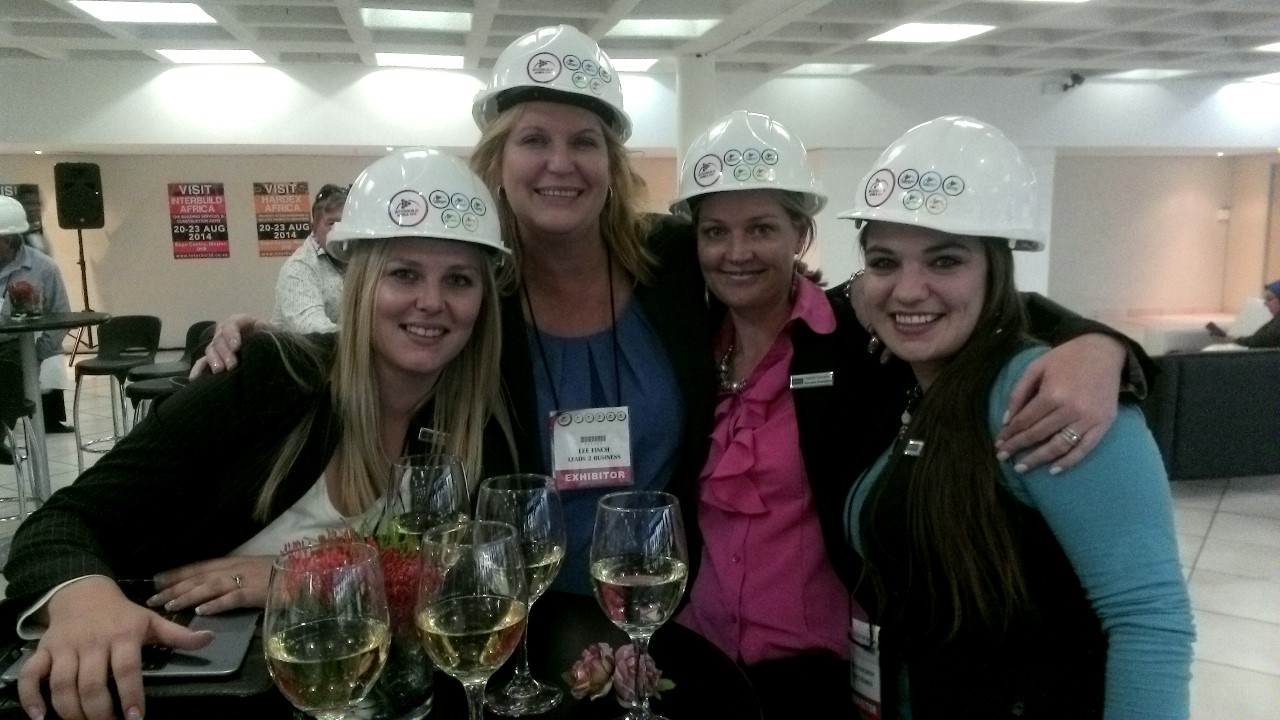
Leads 2 Business attended and exhibited at Interbuild Africa 2014 Exhibition.    I came to thinking post event how one would determine if an event has been successful or not.  In my musings, I came up with a few possible factors influencing a successful event.


  1. Location of event
  2. Number of visitors seen
  3. Number of leads gained
  4. Branding Exercise
  5. Networking and relationship building

Depending on who you are asking you will probably get a combination of the above as an answer.

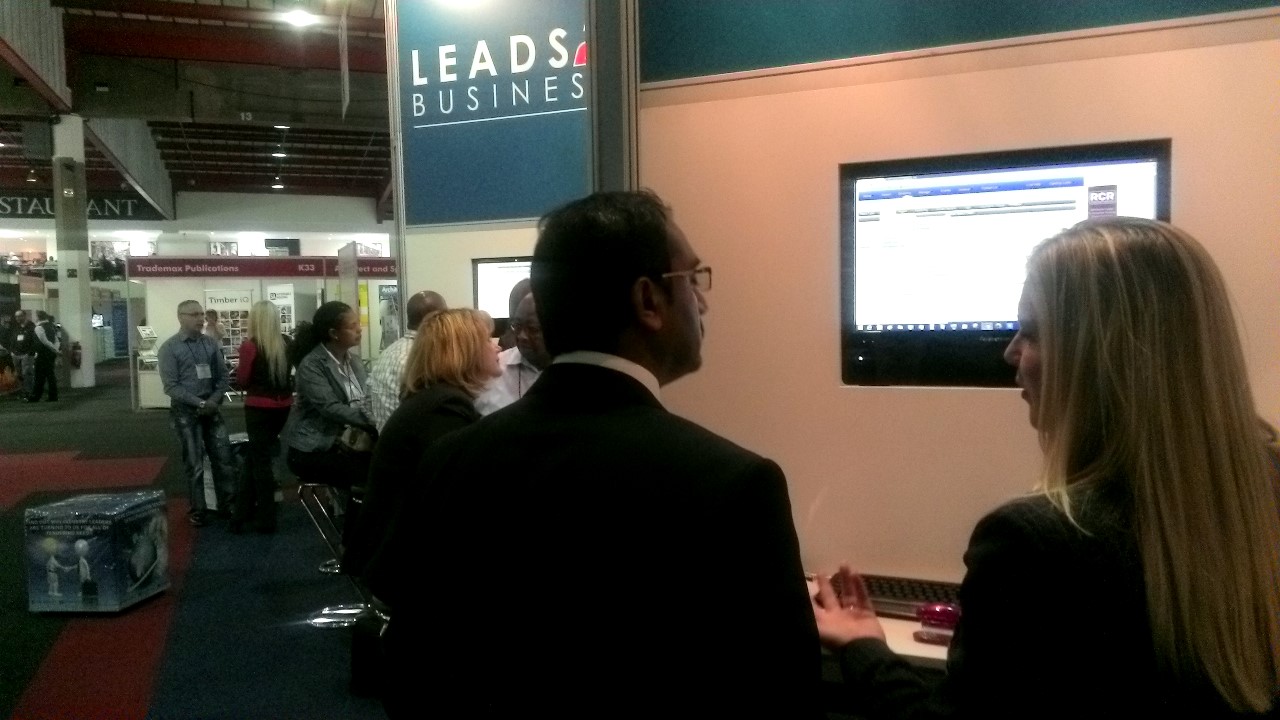
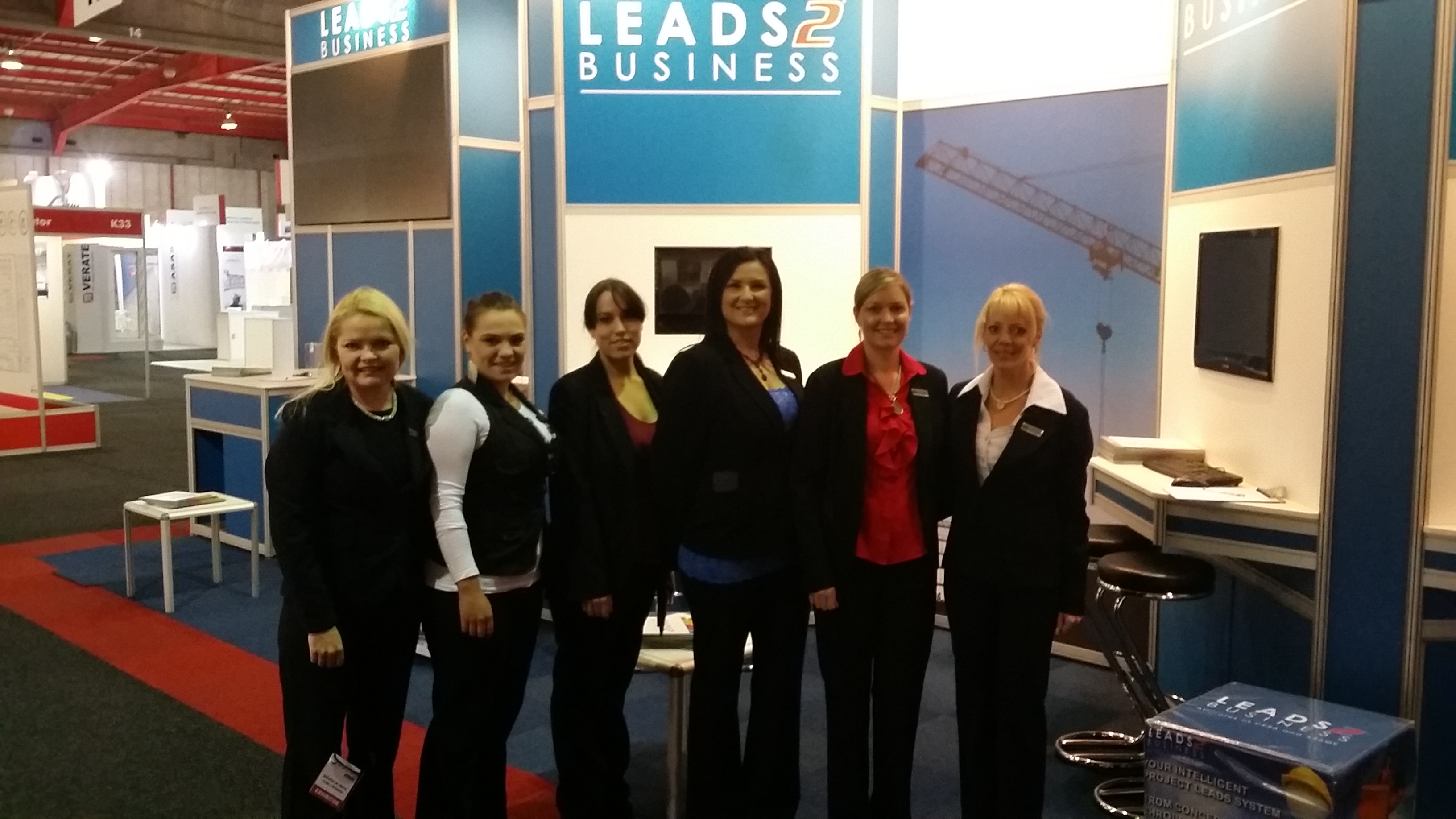
The L2B stand was situated in Hall 6 down the main centre aisle and near the ‘Free to Attend Seminars’ area where Industry visitors could attend relevant workshops and Professionals attending could tick off getting their CPD points on a their checklist of things to do.  We weren’t too far from the food area (which is always a good thing in my opinion – both for the exhibitors and the visitors) and we were surrounded by some great looking exhibits too. It also wasn’t a bad thing that our stunning staff were standing by, ready to chat to visitors from our well branded and beautifully designed stand.


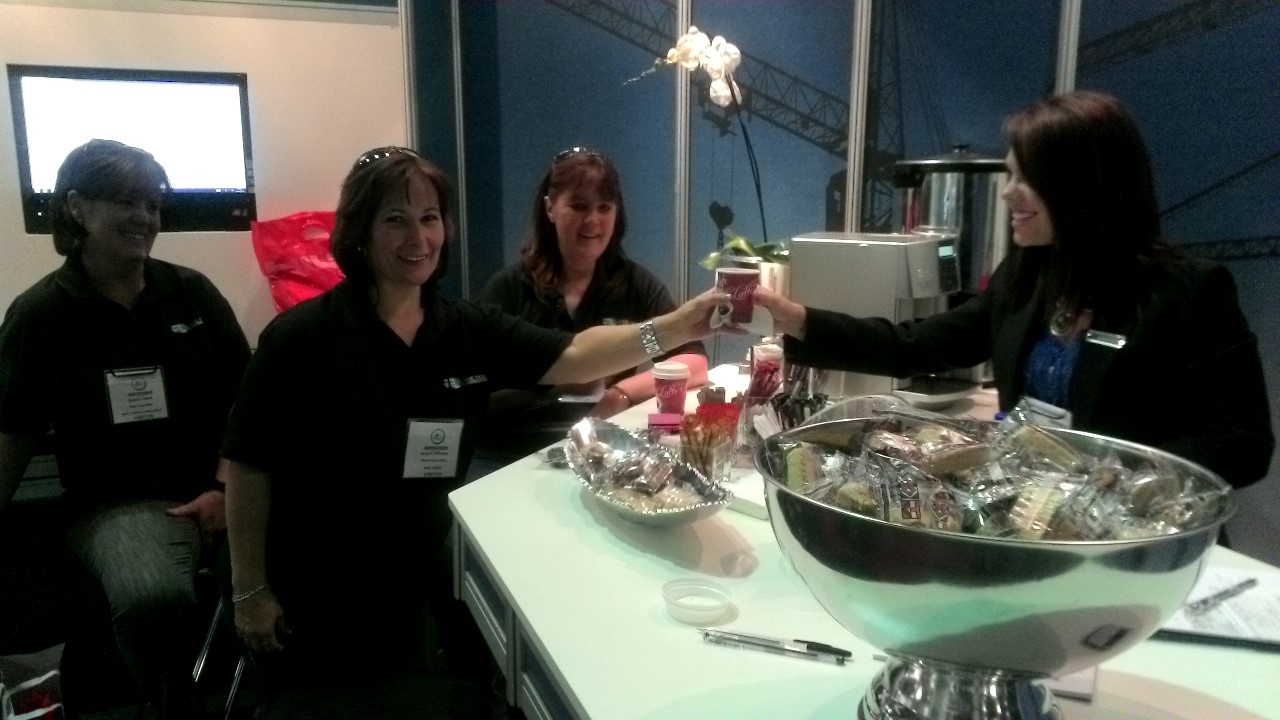
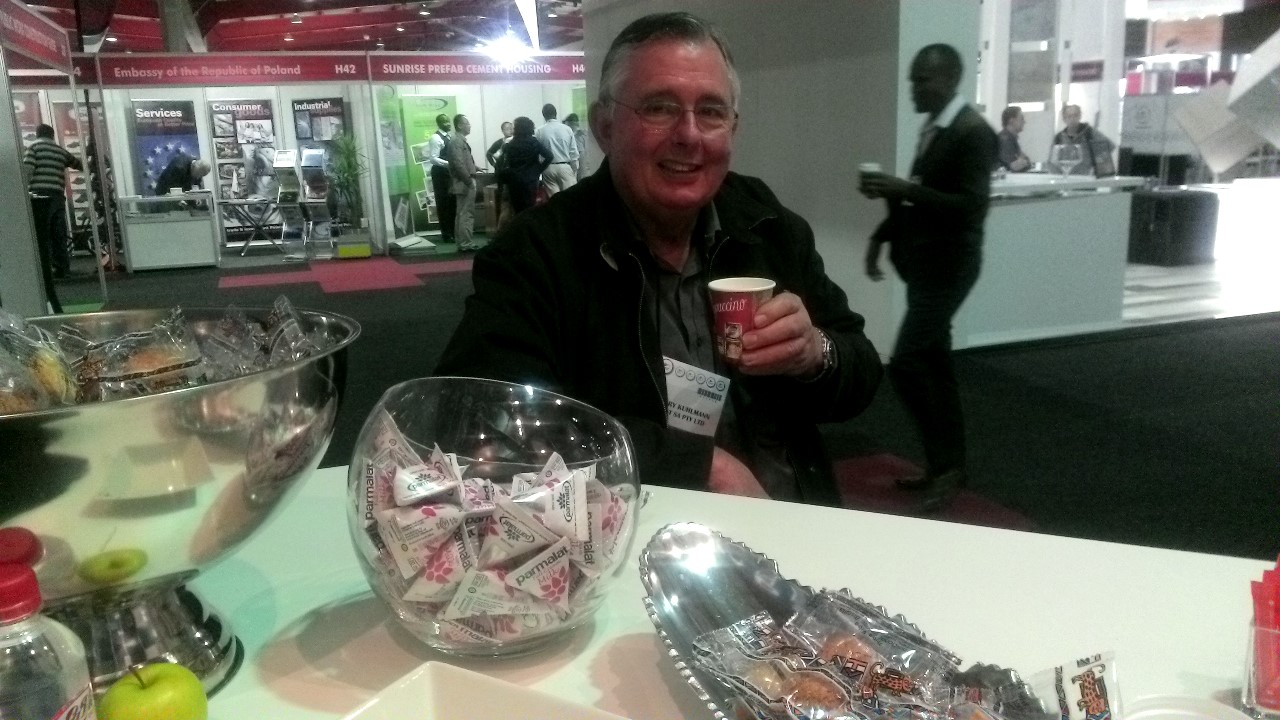
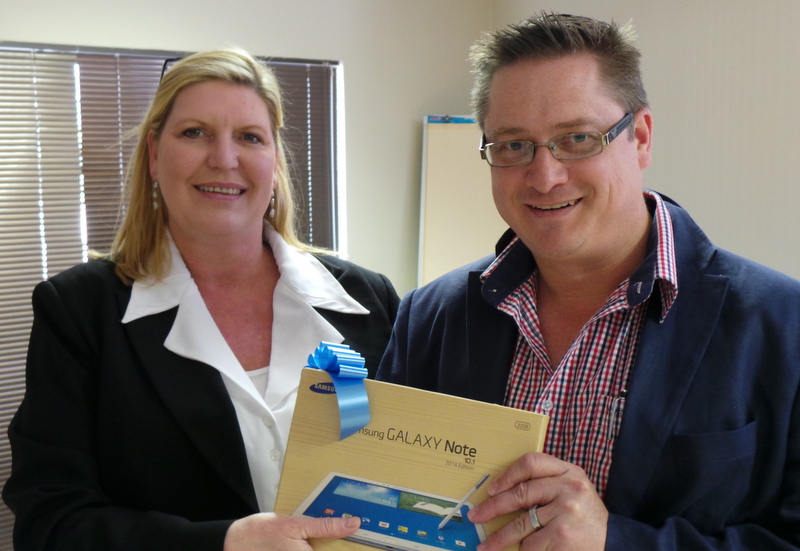
The coffee bar also ensured that the throngs of visitors (Interbuild had almost 7000) stopping by had something hot to drink and also tended to get folk curious about what we ACTUALLY do.  Yes, the cappuccinos were that good.  It was something that ensured repeat visits and reinforcement of our brand and its services.  But I digress…. The competition we ran also ensured we had no lack of willing participants dropping their business cards in the designated competition box to try their luck.  As it turned out, Niels Eichhorn of Aluglass Bautech is one lucky man; walking away with the coveted Samsung Galaxy Note 10.1, 2014 Edition tablet.  Not bad for 5 seconds work!


We had no lack of genuinely interested parties in what our Construction Information can do and how it can be tailored to their business systems.  Some it turns out, have joined us post Interbuild and are already up and running!  I daresay that Interbuild is the beginning of some very sturdy business relationships and the networking definitely gave us an opportunity to begin building these relationships.


So in summary, I would say that it is a combination of the above listed factors that make a successful exhibition and with this reasoning in place, it was most definitely a success.


Leads 2 Business would also like to thank the organisers for putting together such a polished event and making sure that we were well taken care of during our time there.  Also, a big thank you to all our visitors.  It was great meeting everyone and hearing more about what it is our visitors do for a living as well as their opportunities and challenges.  I don’t think I’d be overstepping the mark in congratulating and thanking the dedicated staff that made it all happen.  You are amazing.


Personally, being the person that spent the most time behind the cappuccino machine, I believe that we were definitely the most hospitable stand there.  Just saying.

Me? Biased?   Not at all. Why would you think that?

Reporting post event from KwaZulu-Natal, that’s a wrap for now.  See you at the next event!


About Carmen Barends

Social media adventurer for Leads 2 Business, exploring new frontiers and taking new ground. “Not all those who wander are lost.” JRR Tolkien

Tender Documents to Help the Average Ant

Tender Documents to Help the Average Ant

Tender documents to help the Average Ant.

Every day, a small Ant arrives at work very early and starts work immediately. She produces a lot and she was happy.

The Chief, a Lion, was surprised to see that the ant was working without supervision. He thought if the Ant can produce so much without supervision, would she produce even more if she had a supervisor?

So he recruited a Cockroach who had extensive experience as a supervisor and who was famous for writing excellent reports.

The Cockroach’s first decision was to set up a clocking in attendance system. He also needed a secretary to help him write and type his reports and he recruited a Spider, who managed the archives and monitored all the phone calls. The Lion was delighted with the Cockroach’s reports and asked him to produce graphs to describe production rates and to analyse trends, so he could use them for presentations at board meetings.

So the Cockroach had to buy a new computer and a laser printer and recruited a Fly to manage the IT department.

The Ant, who had once been so productive, happy and relaxed, hated this new plethora of paperwork and meetings which used up most of her time.

The Lion came to the conclusion that it was time to nominate a person in charge of the department where the Ant worked.

The position was given to the Cicada, whose first decision was to buy a carpet and an ergonomic chair for his office. He also needed a personal assistant who he brought from his previous department, to help him prepare a “Work and Budget Control Strategic Optimisation Plan”.

The department where the Ant works is now a sad place, where nobody laughs anymore and everybody is upset. It was at this time the Cicada convinced the Lion Chief, of the absolute necessity to start a “Climactic Study of the Environment.”

Having reviewed the charges for running the Ant’s department, the Lion found out that the production was even less then before!

So he recruited the Owl, a prestigious and renowned consultant to carry out an audit and suggest solutions.

The Owl spent three months and came up with an enormous report and after several volumes it that concluded: “The department is overstaffed…”

Guess who the Lion fired first?

The Ant, of course, because she “ showed a lack of motivation and had a negative attitude.”

Adapted from: Aesop’s Fable/ CP’s Fables

Perhaps this story rings true for you and you are compelled on a daily basis to acquire and complete mountains of paperwork. Unfortunately we cannot change how many supervisors or departments you work within.

We are however hopeful that this secret repository of Tender documents will help you be more positive, effective and motivated in your workplace as well as keep you out of the line of fire from any Lions!

About Taryn Duckham

I am a lover of awesome design, customer centricity and the art of influence. Being able to effect this through analysis, written or visual content and front-end design is part of my work, my great love of creatively solving problems that reach across as many parts of Leads 2 Business as I can.

What the Frack!

What the Frack?


The topic of fracking seems to be coming up more and more these days and sure, I can hold my weight in a 3 minute conversation about it, but in no way have I ever been left feeling 100% confident I know exactly what the frack everyone is on about!  So I went on an information quest and this is what I came up with.


Let’s start with the basics like the definition:

fracking1

ˈfrakɪŋ/

noun

noun: fracking

  1. the process of injecting liquid (usually water mixed with sand and chemicals) at high pressure into subterranean rocks, boreholes, etc. so as to force open existing fissures and extract oil or gas.

Just by definition it sounds invasive, but I knew I was going to have to be objective during this quest in order to find out all the facts and make an informative decision as to whether I’m “for” or “against”.

So let’s break this down, as the definition implies, fracking is the extraction of natural gases or oil by fracturing the layers of shale by means of hydraulics. 2.4 to 7.8 million gallons of water is added to +- 40,000 gallons of chemicals and used during this process, to put that in perspective for you the gallon/litre conversion is 1 Gallon to 3.78541 litres!

The list of chemicals used is longer than my arm but here are a few, Hydrochloric Acid, Ethylene Glycol, Triethanolamine Zirconate, Methanol, Lauryl Sulfate, uranium, lead, mercury and the list goes on, and honestly they all sound a little frightening but mainly because I have no idea what many of them are or what they do, so I will hold any judgement for now due to ignorance.

To continue, once all the fracking has taken place there are geologic formation pressures that force up the “fracking water”, this is then meant to be stored and treated…. never to contaminate.

This is where my investigation got a little shady, and my impartial views began to diminish.

Site after site I stumbled onto terms such as:

“Fracturing fluid migration into drinking water aquifers”

“Waste water transportation accidents”

“Possible environmental impacts include ground water contamination, methane greenhouse gas fugitive emissions, waste water handling, and even potential earthquakes”

Not to mention these fun fracking facts:

  • There have been over 1,000 documented cases of water contamination next to areas of gas drilling as well as cases of sensory, respiratory, and neurological damage due to ingested contaminated water.
  • The waste fluid is left in open air pits to evaporate, releasing harmful VOC’s (volatile organic compounds) into the atmosphere, creating contaminated air, acid rain etc.
  • Methane concentrations are 17 times higher in drinking-water wells near fracturing sites than in normal wells.
  • Approximately 40,000 gallons of chemicals are used per fracturing.
  • Up to 600 chemicals are used in fracking fluid


Explain to me why again is South Africa considering this?!!

Let’s bring South Africa in to this equation, where are we on the fracking global debate? It will seem we are firmly in the exploration phase of fracking as reported on the 2014-03-23 on the News 24 website, the headlines read “Govt gives go-ahead for Karoo fracking” It states that this is going to be an “economic game changer” and I couldn’t agree more, I love job creation just as much as the next person but does the “economic Game Change” outweigh the impact to our environment? Well to be fair, we were not given a vote and neither were the residents of the Karoo.

So all we can all do now is wait and see what the results of the exploration fracking will bring and hope that our government is responsible enough to do what is right for our Beautiful Country and the people who live in it ….


And that is the conclusion of my quest, but don’t take my word for it, go do some investigation yourself, I personally may have got stuck on the negatives of Fracking, so bring us back some positives and we can thrash those out in another blog installment entitled “Why the Frack not!”


Until then 😉


Sources:

http://www.energyfromshale.org/hydraulic-fracturing/hydraulic-fracturing-fluid

http://www2.epa.gov/hfstudy/plan-study-potential-impacts-hydraulic-fracturing-drinking-water-resources-epa600r-11122

http://www.what-is-fracking.com/what-is-hydraulic-fracturing/what-is-in-fracking-fluid/

http://www.dangersoffracking.com/

http://www.what-is-fracking.com/

http://www.iol.co.za/news/politics/sa-to-be-fracked-within-weeks-1.1665020

http://www.news24.com/Tags/Topics/fracking

About Sherina Shawe

I am a strong believer in "What you put in , is what you will get out" and this drives me every day, whether it's at home with my gorgeous family or at work where I get to fuel my competitive spirit. I love who I am and who I'm becoming. I love where I am , but more importantly where I'm going.... #EternalOptimist #Aspire2Inspire