Safety in the office

posted in: Safety 0


Leads 2 Business : office safety


‘It’s all fun and games, until someone looses an eye”


A hackneyed expression to be sure, but true. Nobody likes to think how something can go wrong; how people can be hurt in a situation; never mind plan against it. Where’s the fun in that? But even fewer people like dealing with these types of situations when they do occur. They are stressful at least and scary at worst. People’s health and safety is paramount when it comes down to it.


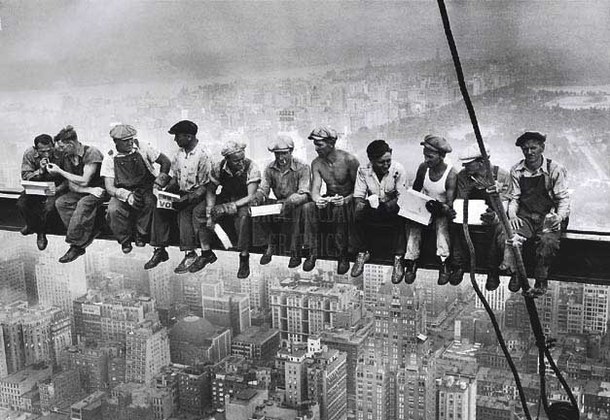
Extreme working environments tend to get the most buzz, when it comes to health and safety. Work environments where large machinery is used or people are working at heights or great depths or working with chemicals and extreme temperatures. Work environments that hiss and clang and are impressive to all of the senses. The average general office doesn’t usually spring to mind. However, the office cannot be left out. They say that the most accidents happen in the home or the most car accidents happen very close to home. Why? I think it’s because people let their guard down. They relax. Accidents happen, when we aren’t paying attention. Now I’m not an advocate for going around constantly wearing a hard hat doing risk assessment on the go. Come on. That isn’t realistic. But treating life like it isn’t going to happen to you; is a recipe for disaster.


Health and Safety in South Africa is legislated under the Health and Safety Act and basically tasks employers with ensuring the safety of their employees; and employees with the active prevention and reporting of potential dangerous situations. Offices must have sufficient fire exits in case of emergency evacuations. There must be a designated meeting area outside, to do a head count and ensure that everyone got out of the building. The office has fire extinguishers, that are regularly checked and maintained. The staff should know how to use them. Something about “pulling a tab, spraying and holding on”. There are staff that have basic first aid training, and a first aid box to deal with minor accidents. There’s security services; alarm systems, panic buttons and physical security guards. Employees have the responsibility to not only look out for themselves but also their colleagues and their employer as a whole. An employee will notice a problem (for example a shorting wall plug) before the employer and they must report it. Reporting faulty equipment as well as wiring and plumbing is essential in ensuring a safe working environment. The prompt and correct fixing of said problems is even more important. Employees must be vigilant with their own safety, as this ensures the safety of others. External doors must be closed at all times, preventing unknown persons from entering the premises. Those that smoke must make sure that their cigarette butts are completely extinguished to prevent any unnecessary and dangerous fires. Spills of any sort have to be mopped up to prevent slips and falls. If any glass gets broken, this must be swept up immediately. The correct and responsible use of equipment is paramount at all times, especially kitchen equipment. Anything that produces boiling water or scalding steam must be shown the due respect. No one wants to have to deal with blistered hands or worse. The new coffee machine sounds like ye ol’ steam locomotive when it gets going. The amount of pressurised steam in that thing, is quite unnerving. (They’ve been known to explode, you know that right?) There’s a level of common sense required when dealing with people’s safety. Common sense sometimes goes walkabout, and one silly decision can have far reaching consequences. I tend to refer to it as “The Stupid”. It’s a moment in time where a choice is made. “The Stupid” chooses short quick fixes over the time consuming, safer and ultimately smarter choice. “The Stupid” won’t have to worry about where the first aid kit is or how the fire extinguisher works, because it will inevitability be someone else who will have that responsibility, as “The Stupid” will be unconscious or on fire at that point.


People can be hurt or dead in a blink of an eye. The weird and varied ways people can be hurt or killed, is staggering and frankly, terrifying. No one can live their lives wrapped in bubble wrap, but showing a complete disregard for the safety of themselves and others is the ultimate in disrespect. You can’t go back. None of us can. We can control only so much, and that little we can control can go a long way in ensuring a safe and supportive work environment.

About Claire Donaldson

I started working at Leads 2 Business in February 2005, and have served as Head of Department of Daily Tenders from 2007 until the present. I oversee both the Daily Tenders South Africa and Africa Departments.

General Safety in South Africa

Leads 2 Business : Safety

Crime in South Africa, like many other places in today’s world, can be a problem. Despite some negative perceptions about crime in South Africa, it’s generally safe & friendly, all you need to do is take sensible precautions & follow some general rules in order to stay safe.


Personal Safety Tips

  • Be aware of your surroundings
  • Avoid unfamiliar areas & walking alone
  • Avoid wearing/displaying valuables & large amounts of money
  • Take ATM Safety precautions
  • If you travel inform someone of your destination
  • Ensure that you know relevant emergency numbers
  • In a robbery situation, remain calm & do not resist
  • Take a self defense course
  • Don’t leave animals in the car
  • Trust your instincts at all times


Home Safety

  • Fencing & Gates
  • Alarm, CCTV & Intercom Systems
  • Dogs
  • Security Lighting
  • Ensure gates are locked at all times & keys/access devices are in a designated area


Vehicle Safety

  • Keep doors locked & windows closed
  • Do not leave valuables locked in the car
  • Park in well-lit places
  • If something seems suspicious, rather drive away
  • Vary the routes that you take & do not give strangers a lift
  • Ensure you have sufficient petrol
  • If you are in a road accident, drive to the nearest police station
  • Have your keys ready before approaching your vehicle
  • If you feel you are being followed, rather drive to the nearest police station


Safety Tips Unique to SA:

  • Look out for potholes
  • Beware of animals on the road & other native creepies and crawlies
  • Swimming in rivers can be dangerous due to hippos, crocodiles & bull sharks
  • Take Malaria precautions (repellents, nets)
  • Take Tick precautions (to prevent tick-bite fever)
  • Avoid drinking water from Rivers (Bilharzia & Cholera)
  • Sun protection (even on a cloudy day)
  • Beware of Remote Jamming
  • Beware of Taxi’s while driving/ walking
  • Keep updated on Load-shedding Schedules & take pro-active measures


Although it seems like you’ve just been handed a mountain of Safety Tips they are not there to prevent you from enjoying life. Keep them in mind & make them part of your daily routine & they will become effective habits before you know it.

Think of it like Dr George Cui, “Safety First, Then Healthy, then Happy, then Wealthy.”


P.S. Please add your Safety Tips in the comments section below.


Further Reading:

https://www.travelground.com/blog/10-ridiculous-commonly-asked-questions-south-africa/


About Sasha Anderson

Millennial Mom + wife living the hash-tag life. Reach out if you want to talk: L2B, social media, construction, technology, marriage, parenting, popular culture and travel. Remember: If You Fail - Fail Forward

Intellectual Health

Leads 2 Business : Intellectual health


Intellect…. now this is something I thought evaded me my whole school going life, or did I just do a really good job avoiding it?…..Hmmmm, I was more of a social butterfly you see, but lucky for me not all is lost because it turns out you can be both!

It’s a good thing because planning my social life from Monday to Friday and recovering from it from Sunday to Tuesday may have made me a fun friend to be around at school, but it sure wouldn’t pay the bills now that I work!

I would like to think I now have a fine but workable balance between the two 🙂


I’ve come to realise I was never “stupid” I was just never pushed or motivated.

This didn’t hamper me though thankfully, yes it may have taken me longer than some, but I got there!

I developed the need to be & do better and that turned into the need to be the best (Status of Mission: currently still striving for!), now sure, this unfortunately only occurred to me once I was firmly out of school and coincidently working for the company I’m currently working for….

Is that really coincidental? I think not!


Answer yourself this question, have you ever enjoyed learning anything whereby the person teaching you was someone you really didn’t like??? The answer is NEVER!!!


So would I be wrong in saying that in order to improve your intellectual health you need to find yourself in an environment whereby you are motivated, encouraged and ultimately rewarded?

So whether it be at school, college, your work place or even in your day to day life, FIND THIS!!!

Take my word for this, It will make a world of difference in your life :).


The wonderful thing about humans, is that we never stop learning or teaching, I mean, just last week I was at work, in our canteen and was disturbed by the smell of burning toast, turns out it wasn’t the toast burning but rather the crumbs within the toaster, so, I simply pulled out the bottom tray of the toaster and emptied out all the crumbs… needless to say this left some of my colleagues speechless!!

Seriously! Are there people out there that didn’t know about this tray????


Well, before I get carried away, I had my own little “learning” experience around the same time….

First let me ask, there has to, has to be other people out there that didn’t know this? Please!

I have to believe I’m not the only one!

So…. I have NEVER used the word “utmost” in my life, I always thought the phrase was “up most” (which I secretly still think makes more sense), but anyhoo, who am I to judge the Oxford Dictionary!


Now I suppose you are waiting for me to bestow upon you some practical ways in which you can improve your intellectual health, so here it goes!


  • First and for most, place yourself in a place that inspires you to learn.


  • Physical Exercise – Get the blood pumping, this is not only for your muscles but for your brain.
  • Minimizing Stress – take “you time”, put your phones, tablets, friends and family on silent for a bit, breath, relax and when you do sleep make sure it is uninterrupted.
  • Healthy Eating – Include in your diet Essential fatty acids, these build the insulation of the neurons in the brain – FACT!
  • Cut out foods with a high glycaemic index like sweets, most breads and a whole list of other stuff. http://www.theingredientstore.com/amescompany/GIindex.html
  • Mental Exercise: The brain is a muscle so exercise it, do a puzzle, download one of many brain games available for computers and for smart devices, do a crossword, Sudoku, discuss topics of real substance – not the latest celebrity pregnancy.

I also thought before I go, I would like to touch on another health issue that I think is equally as important and that’s emotional health, because lets face it, if your head is not in a good place, nothing else matters, your ability to see past your emotional problems mess with your ability to learn and ultimately puts a hold on your personal growth.

I recently found myself having to reassess what is important to hold on to and what I need to let go of, and which of these cloud judgement and stunt “awesomeness”!
My findings – well lets just say that anger, resentment, judgement, grudges and gossip have to go!

Its a process, but some people find it easier than others not to hold on to these things, and I’m fortunate to be one of these people. 🙂

So, go do some unpacking and reshuffling of the soul and see how revitalised you feel, this will unclutter your brain and you will think clearer, then once that has happened, CHALLENGE your brain, and CHALLENGE it some more!!


Albert Einstein wrote, “Everybody is a genius. But if you judge a fish by its ability to climb a tree, it will live its whole life believing that it is stupid.
So find your place and find your purpose;)

About Sherina Shawe

I am a strong believer in "What you put in , is what you will get out" and this drives me every day, whether it's at home with my gorgeous family or at work where I get to fuel my competitive spirit. I love who I am and who I'm becoming. I love where I am , but more importantly where I'm going.... #EternalOptimist #Aspire2Inspire

Leads 2 Business : Construction Safety

Safety in Construction

posted in: Safety 0


Construction is a dangerous, high hazard industry that includes a wide range of activities involving construction, alterations, repairs, additions, building and renovations. These also include residential construction, bridges, roadway paving, excavations and demolitions. Yep, and blasting with explosives, working with huge machinery and dangerous electrical equipment.

Construction safety is very important to prevent fatal and non-fatal injuries as well as many other different illnesses. Workers in the construction sector have greater exposure to biological, chemical and ergonomic risk factors as well as noise and extreme temperatures. It is also one of the most physically demanding sectors.

Serious potential hazards are:

– Falling from heights / rooftops
– Unguarded machinery
– Being struck by heavy construction equipment
– Scaffold collapse
– Electric shock
– Trench collapse
– Failure to use proper protection
– Repetitive motion injuries
– Silica dust and asbestos

Nearly 6.5 million people work at approximately 252,000 construction sites across South Africa on any given day.

Things to look out for regarding your personal safety:

* aerial lifts (take the stairs, although those are hazardous for me as I keep tripping down them!)
* arc welding
* electrical and fire hazards
* bio-hazard safety (I am always spilling stuff!)
* boom collapsing (one has collapsed on my head in a parking area!)
* carbon monoxide poisoning
* carpal tunnel syndrome
* electric cord safety (don’t ever want to be shocked in that way!)
* falling objects (wear your helmet)
* eye protection (not just a fashion statement!)
* ladders (not just for the superstitious, these can really be dangerous!)
* protective clothing such as helmets, gloves, shoes, etc
* nail guns (ouch….hurts just to say it).
* power lines (not something you want to drill into, could be a shocking experience)
* power saws (turning an ordinary day into something from a scary movie)
* roof collapse
* trench safety (you don’t want to dig your own grave)

Safety Tips:

1. Use the proper tool for the designated task.
2. Frequent use of inadequate or poorly designed equipment will eventually lead to health hazards, for example tendinitis, trigger finger, white finger, carpal tunnel syndrome.
3. Protect your ears and eyes from intense noises and vibrations; opt for power tools with lower vibrations, muffled noises, and longer trigger tools.
4. Maintain good posture and balance the tools in correct alignment to your body at all times.
5. Always be aware of your surroundings. Look out for overhead lines, obstructions, low clearances, underground utilities, and other such obstacles that could prove to be a nuisance or a lethal hazard.
6. Know, understand, and follow your work space’s comprehensive safety program issued for that specific workspace, job position, and / or task at hand.
7. Don’t use damaged tools – examine each one before its use to ensure that it is in proper working condition. Maintain tools in good, clean working order
8. Never use a damaged or in any way weakened scaffold and don’t use in bad weather especially if covered with snow or ice
9. Don’t leave materials or debris abandoned or blocking exits
10. Keep tools in your belt to keep your hands free while climbing and descending.
11. Never touch a chemical spill
12. Always wear appropriate clothing and shoes respective to your job.
13. Fire extinguishers and First Aid kits must be available and readily attainable.
14. Never remove or tamper with safety devices.
15. A hard hat will protect you if there’s a risk of falling objects, as well steel-toed boots.
16. Wear gloves if you’re handling sharp objects or toxic substances.
17. Wear goggles if your work poses a hazard to your eyes.
18. Wear safety harnesses if you’re working from an elevated location and there’s the risk of falling. (If you are anything like me, you can trip and fall over literally anything. So having a guardrail or something to grab onto is really a life saver).
19. Wear a breathing mask at all times, especially if you deal with dangerous or toxic chemicals or fumes or there is poor ventilation or your workspace has debris, dust, and other flying particles.

20. Equipment onsite should have lights and reflectors. Especially when working at night, this is to see and to be seen.


All employees should be trained to understand the proper way of identifying possible hazards and understanding on how to avoid dangerous situations. They also need to be made aware of the correct procedures to follow should something happen.
The contractor is responsible for providing a safe work environment for employees and pedestrians.

Although the construction industry is dangerous, construction conditions have improved over the years. As technology increases, so do the safety and working conditions.

Knowledge is power and in this case, without knowledge that power could kill you 😉 Rather be safe than sorry and watch where you are walking 🙂


https://www.osha.gov/Publications/OSHA3252/3252.html
https://www.osha.gov/doc/
http://en.wikipedia.org/wiki/Construction_site_safety
http://ehstoday.com/construction/news/work-zone-safety-tips-5432\
http://civilengineerblog.com/construction-site-safety-tips-will-reduce-hazards-work/

About Michelle Crosby

I started my journey at Leads 2 Business in the Directory Department in 2012. I was then promoted to the Private Projects Department in 2014 and was recently promoted to Projects HOD this year.