
The History of Security

posted in: General 2

The History of Security

Security must be one of the oldest and largest sectors in any industry. We are all so reliable on security, we can’t even say it is only for the individuals who can afford it, the sad reality is, it is a must in today’s world. But have we ever thought how security actually began?
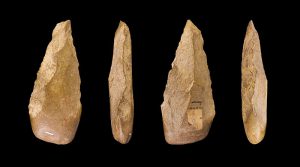
The home alarm system as we know it today obviously wasn’t present during the Stone Age. Cavemen used other means of protection to keep predators at bay. Initially, they used branches and rocks and later on they created slingshots, bows and arrows.
As time progressed, domesticated wolves were used to protect homes. People would rescue abandoned wolf cubs and raise them to protect their possessions. Eventually, this leads to the guard dogs we know today.
In ancient Egypt, around 3150 BC, people would dig trenches around their dwellings, towns, and fortresses. These trenches, also known as moats, were filled with water and used to protect the people from intruders. With the growth of businesses and business ownership during the mid-1700s, people started using security guards to protect their properties. Royalty also used security guards for their personal protection. Today, the human touch is still used to offer protection.
One of the alarm systems that closely resemble home security alarms today was the electromagnetic alarm in the mid-1800s. This alarm was used by wealthy people to secure their possessions. Electromagnetic sensors were placed in doors and windows, and when an intruder crossed them, they would set off a loud alarm and scare off the intruder.
It wasn’t until after World War I that Americans really started prioritising safety and protection. People started using the services of door shakers, yes can you believe it? If you paid for this service, a guard would “shake” your door handle at nighttime, to make sure that it was locked, today I am afraid things will turn very ugly if someone had to shake your door in the middle of the night. Years later, in 1966, a nurse named Marie Van Brittan Brown invented the first video home security system and the ability to open a door with a remote control. Yes, you read right, a nurse! These were the first major developments leading to the home security systems we know today.
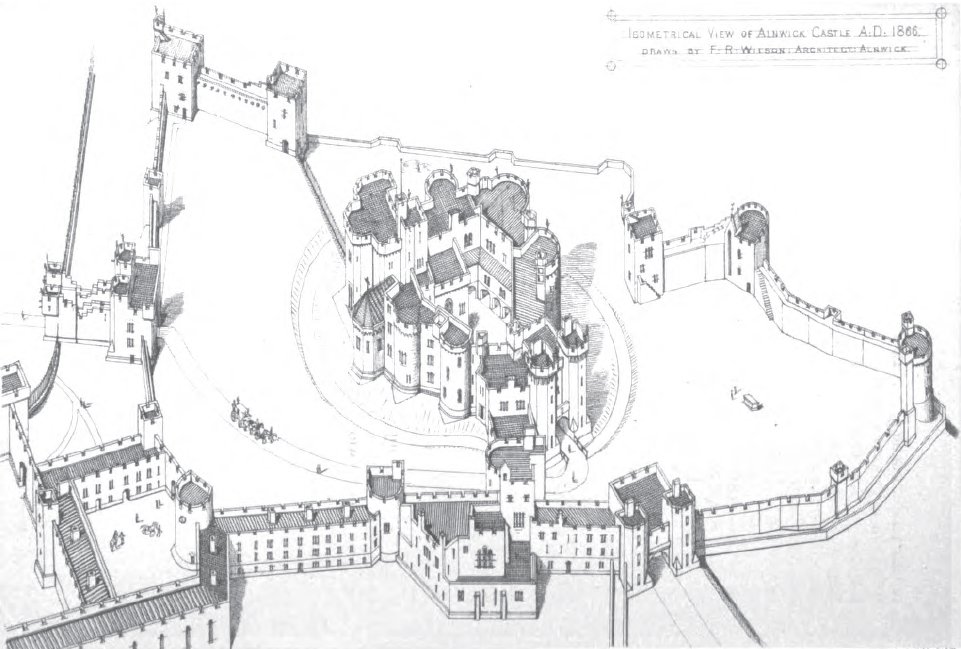
In the early 1800’s, there were no established law enforcement agencies or federal authorities to chase down outlaws across territorial lines. They were also inadequately equipped to go after criminals escaping the state or country which were responded to by the introduction of the security industry. The Vigiles Urbani who guard the city of Rome was said to be the origin of security personnel. Security guards were called “Watchmen” in the old days or middle ages in Europe.
The security industry that we know today was founded in 1850 by Allan Pinkerton with the establishment of the Pinkerton National Detective Agency based in Chicago. This swiftly became one of the industry’s largest and most prominent security agencies. One of the main clients of the agency were railroad operators or companies which were usual victims of crooks who robbed passengers and trains of cargo and personal items.

Security guards had a more comprehensive role aside from private policing which include investigating crimes, guarding railroad shipments, giving security advice to businessmen who became frequent victims of lawless criminals.
Regulation of the security industry commenced in 1915, wherein the state of California provides licensing and regulation of private security guards under the Administration of the State Board of Prison Directors. They said regulation was brought about by the increasing number of private security agencies and personnel mushrooming in the state and in the United States.

The private security industry in South Africa is an industry providing guarding, monitoring, armed reaction, escorting, investigating and other security-related services to private individuals and companies in the country. Over the years there has been tremendous growth in the private security industry, not only in South Africa but also in the rest of the world.
The private security industry in South Africa is among the largest in the world, with over 9,000 registered companies, 450,000 registered active private security guards and a further 1.5 million qualified (but inactive) guards; many times the available personnel than the combined South African police and army.
Studies have shown that South Africa had 2.57 private security personnel for every police employee. This is attributed by some to the country’s relatively high levels of crime to a lack of public funds from Parliament towards the South African Police Service (SAPS) or to an increasing trend in many countries towards government outsourcing of certain security functions. Others have suggested the number of high-wealth individuals in South Africa in comparison with the rest of Africa has led to the growth of the industry.

Like I always say “Safety starts with awareness, Awareness starts with you!”

Sources
https://kids.britannica.com/kids/article/Stone-Age/353814
http://freecourses.iimra.com/wp-content/uploads/large-icon-11.png
http://cngubaneinc.co.za/practice/forensic-investigations-unit.html

If you are interested in becoming one of our subscribers, please visit our website.
To view notes with screenshots on how to use our website, please visit our Wiki site.
To view more articles, please visit our blog.

About Christine Brooks

My journey started in 2015 with Leads 2 Business, as an Account Executive, and gradually grown to take the role of being the Client Liaison Officer (CLO) since 2018. Assisting in the delivery of our services and insuring our clients expectations and requirements are exceeded.

Did you Know #DYK: DWAF

Departement van Waterwese en Bosbou

Ons lewe in ‘n tydperk van globalisasie en waar kwaliteit tyd nie meer bestaan nie. Waar is die dae toe ons nog die prag van die natuur om ons waargeneem het?

As jy vassit in die verkeer, sien jy nog die wonderwerke van ons Skepper om ons raak? My antwoord is onwillekeurig nee. Ons lê op ons toeters vir die stadige trok voor ons om na die linkerbaan toe te beweeg, sodat ons kan verbysteek en jaag na ons volgende afspraak. Ons kla so graag as die wonderlike reëndruppels begin val want net gister is my motor gewas. En dan aan die anderkant, watter ongelooflike gevoel om kaalvoet in die reën te dans. Die bekoring van nuwe lewe, geure en kleure na die eerste reënval is diep in my geheue vasgeprent. As jong dogtertjie sal ek nooit die ritme van reëndruppels op die grondpad vergeet nie, daarvan dan my bynaam ”Kaalvoetklonkie”


Soos die koms van elke nuwe seisoen, met nuwe groei en verwagtinge besef ek weereens watter groot rol die Departement van Waterwese en Bosbou beter bekend as DWAF speel.


DWAF is die bewaarder van Suid-Afrika se water en bosbouhulpbronne. Dit is hoofsaaklik verantwoordelik vir die formulering en implementering van beleid wat hierdie twee sektore beheer. Dit het ook die verantwoordelikheid vir waterdienste wat deur die plaaslike regering verskaf word. Terwyl hulle strewe om te verseker dat alle Suid-Afrikaners toegang tot skoon water en veilige sanitasie verkry, ontwikkel die watersektor ook effektiewe en doeltreffende waterhulpbronbestuur om ekonomiese en sosiale ontwikkeling te verseker. Die bosbouprogram handhaaf ook die bestuur van die land se natuurlike bosbronne en kommersiële bosbou vir die blywende voordeel van die land.


DWAF het talle projekte / programme en Tenders gelys wat waardevol vir ons kliënte kan wees.


Hier is slegs ‘n paar Projekte wat op hul webwerf genoem is, naamlik:

+ Groot Letaba Water Development Project
+ Groundwater
+ Hydrology (Data, Dams, Floods and Flows)
+ Integrated Water Planning Portal – Strategy Portal
+ Integrated Water Resource Planning
+ Integrated Water Quality Management Plan (IWQMP) For The Olifants River System
+ Integrated Water Quality Management Strategy
+ Lusikisiki Regional Water Supply Scheme
+ Mokolo and Crocodile River (West): Water Augmentation Project (MCWAP)
+ Mzimvubu Water Project


Ons weet beide water en bosbou speel ‘n groot rol in ons lewens. Indien nie die grootste nie. Ons neem dikwels ons pragtige land as vanselfsprekend en daarom moet ons ook die verantwoordelikheid neem om water te bespaar en na ons bosbou te kyk.
Ek kan boeke en verhale skryf oor die onderwerp, maar gaan net so vlugtig ‘n paar goedjies noem. Ek sal ‘n bietjie van alles skryf, so jy sal beslis iets interessants vind om te lees.


Lekker “het jy geweet” feite?

  • Het jy geweet as jy 5 minute stort, in plaas van bad, sal slegs sowat ‘n derde van die water gebruik word. Dit kan in ‘n week tot 400 liter water bespaar.
  • As jy verkies om te bad eerder as om te stort, moenie die bad op die rand vul nie. ‘n Bad gebruik tussen 80 en 150 liter water per bad.
  • Het jy geweet Internasionale Bosdag val presies dieselfde dag as Menseregtedag in Suid-Afrika, dus word dit meestal geïgnoreer.


Fassinerende Gesondheid feite oor water:

  • Slegs 1,1% van die water op aarde is geskik om te drink soos dit is.
  • Ons liggame bestaan uit 55 – 75% water.
  • Depressie en moegheid kan dikwels die simptome van dehidrasie wees.
  • Dit is gesond om water met etes te drink, aangesien dit die verteringsproses bevorder
  • Die beste manier om ontslae te raak van waterretensie is om baie water te drink. Water retensie kan ‘n teken van dehidrasie wees.
  • Water laat die liggaam toe om vette meer doeltreffend te metaboliseer.
  • Goeie water inname verhoed dat die vel sak.
  • Water is die hoofvoedsel wat die liggaam benodig.
  • Die dorsrefleks kom slegs voor wanneer ons liggame reeds gedehidrier is.
  • Kinders dehidreer vinniger as volwassenes, ‘n opname het getoon dat 65% van die skoolkinders te min water drink.
  • ‘n 2% vermindering van die water vlakke in die liggaam kan lei tot ‘n 20% afname in geestelike en fisiese prestasie.
  • Dehidrasie kan kontraksies in swanger vroue veroorsaak.


Vyf feite rakende die bosboubedryf

  • Natuurlike woude dek ‘n derde van alle grond op aarde. Soos ons weet, absorbeer bome koolstofdioksied en gee suurstof vry, wat die absolute noodsaaklikheid van ons voortbestaan maak.
  • Plaaslik is slegs 0,4% van ons landmassa gedek deur natuurlike woud. Dit is net 500 000 ha, ondersteun deur 39 miljoen hektaar wat deur savanne stelsels gedek word.
  • Daar is drie hooftipes bome wat op Suid-Afrikaanse plantasies groei. Hulle is dennehout (44%), Eucalyptus (44%) en Wattle (12%).
  • Die Suid-Afrikaanse bosboubedryf het 158 000 mense in diens en is verantwoordelik vir 11% van die land se landbou-BBP en 5% van die BBP.
  • Daar is sowat 26 000 houtkwekers in Suid-Afrika. Dit sluit in die groot multinasionale korporasies, die regering en duisende kleinskaalse maatskappye.


Laaste maar nie die minste nie….

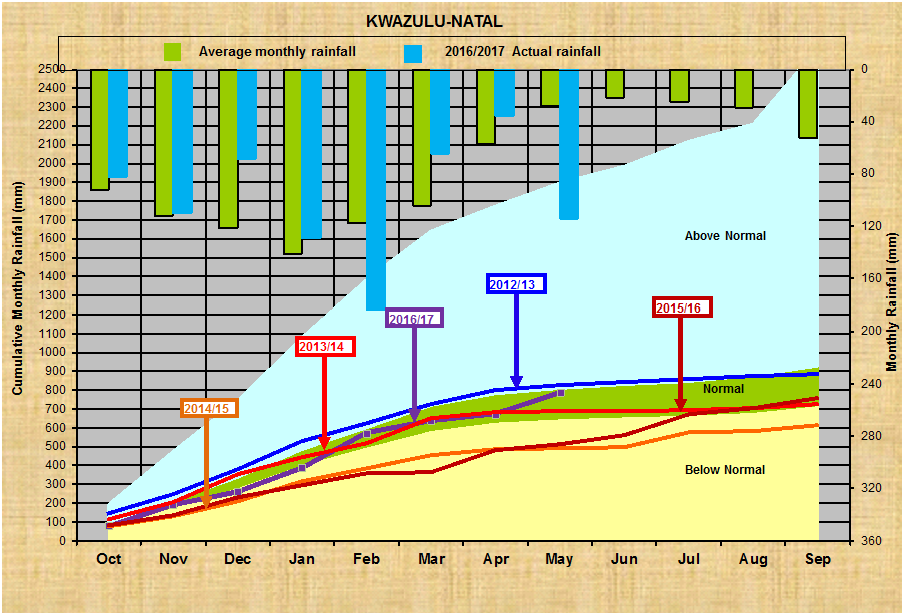
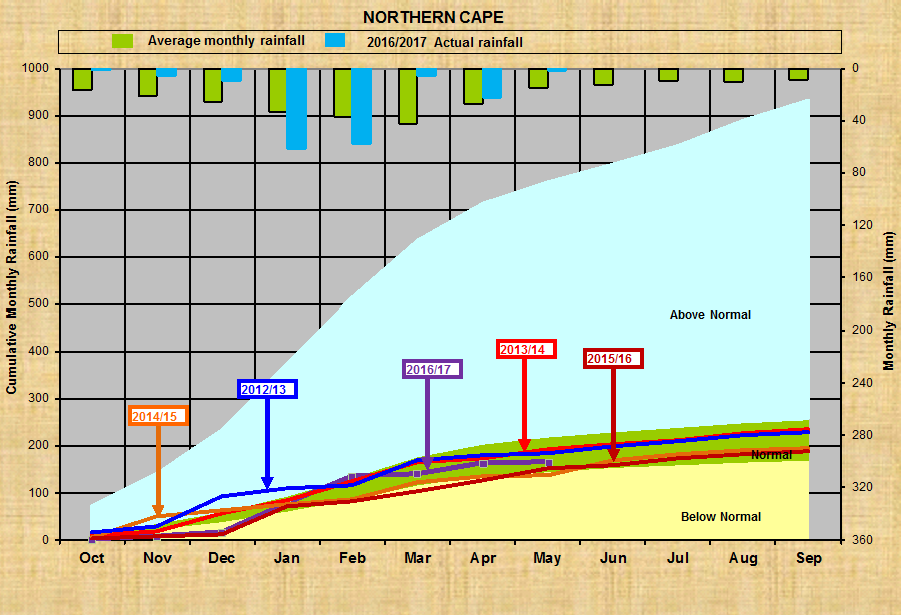
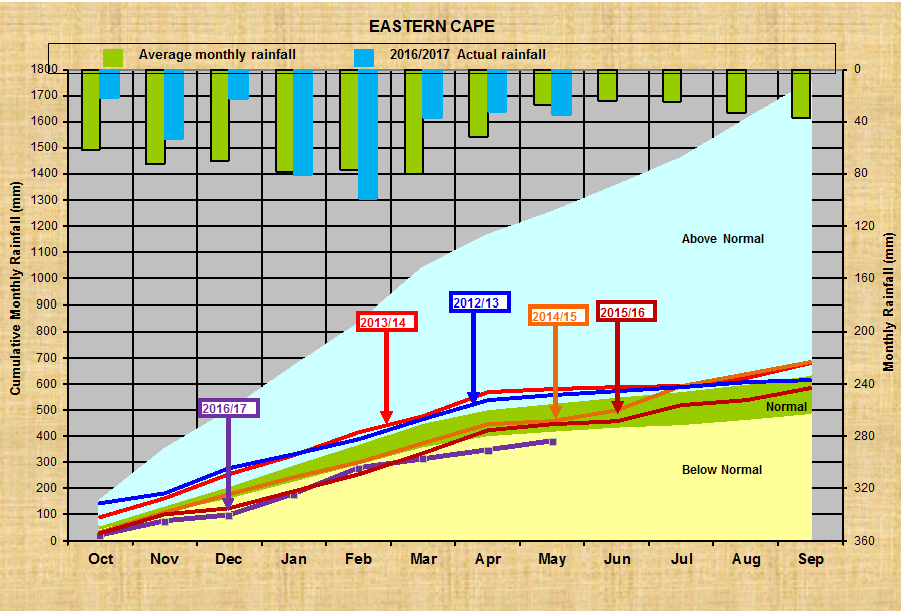
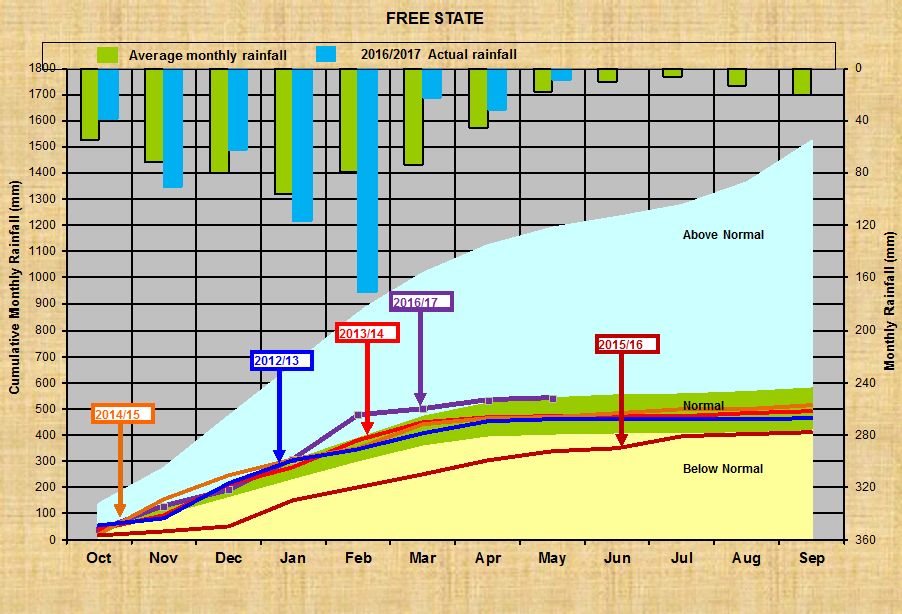
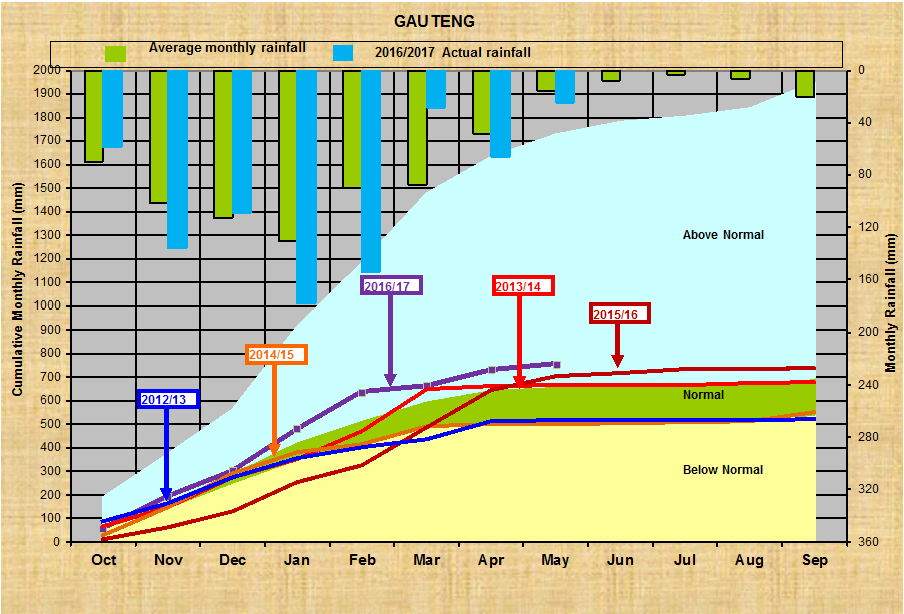
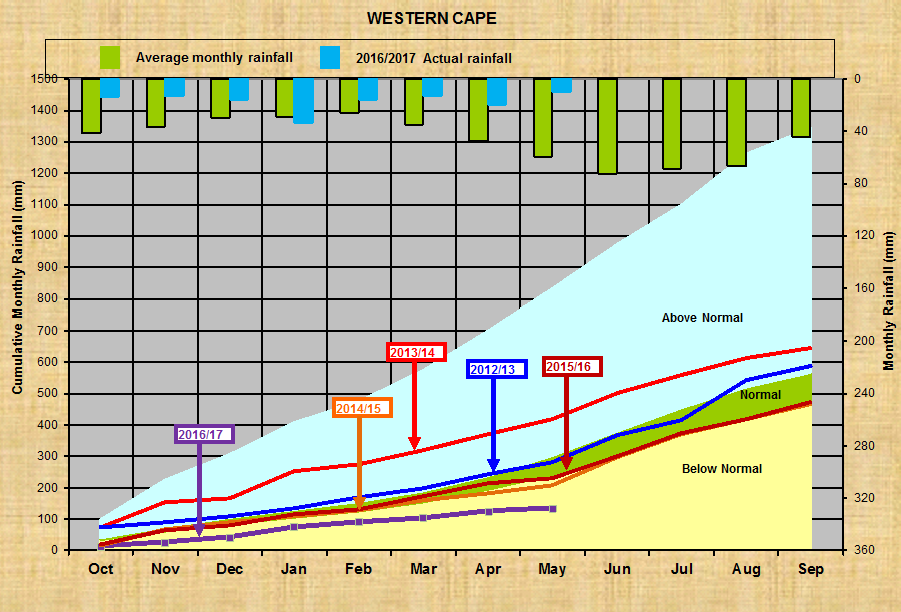
Dit is goed om ons self ‘n bietjie meer wys te maak op ons reënvalle en damwatervlakke. Ons sien dikwels dat iemand iets oor hul watervlakke op Facebook plaas.
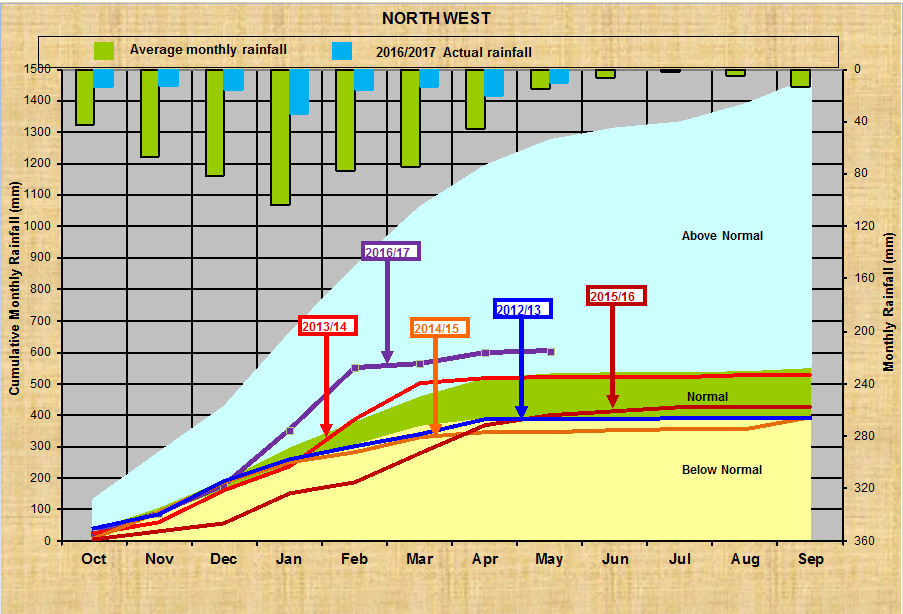
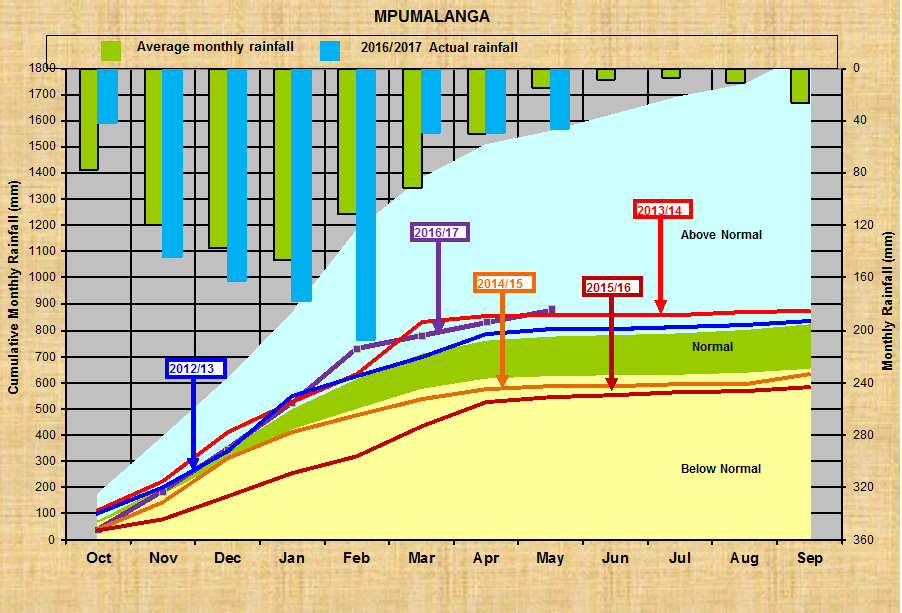
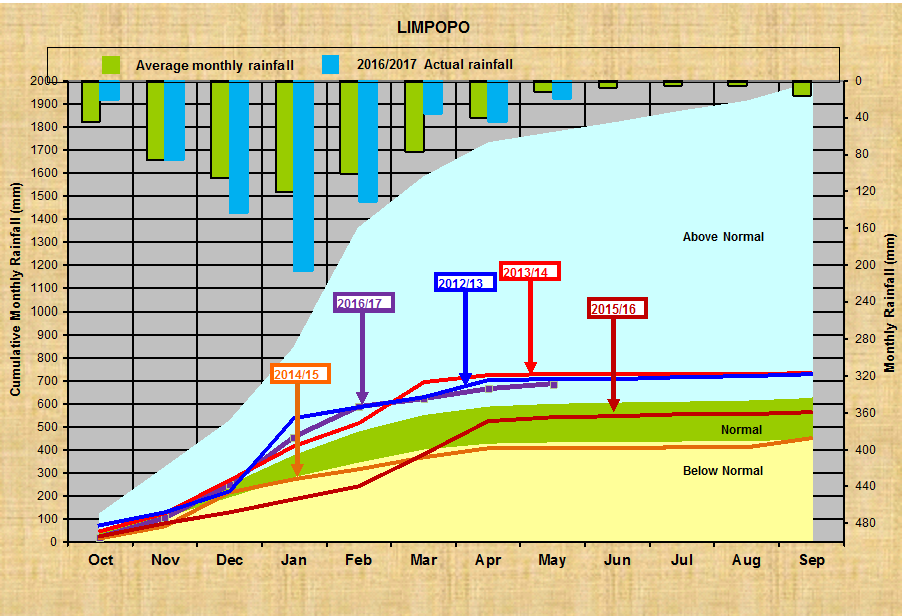
Wel, ek gaan jou ‘n paar interessante grafieke van ons Provinsiale Reënval asook ons Dam vlakke wys. Spesiaal vir die ernstige hengelaars daar buite. Ken jou watervlakke!


Gauteng:


Wes-Kaap:


KwaZulu-Natal:


Noord-Kaap:


Oos-Kaap:


Vrystaat:


Noord Wes:


Mpumalanga:


Limpopo:


Provinsiale Dam en Rivier watervlakke
Data laas opgedateer
2017-08-07
Volle kapasiteit in miljoen kubieke meter

Wes – Kaap
=1867.0

Noord – Kaap
=145.5

Oos – Kaap
= 1832.4

Vrystaat
= 15968.0

Noord Wes
= 15968.0

Mpumalanga
= 2538.8

Limpopo
= 1522.3

Kwazulu- Natal
=4782.7

Gauteng
=114.8

Onthou, elke druppel water tel, en dink voor jy op ‘n stukkie papier ink!


Bronne
DWAF
http://www.preventionweb.net/organizations/937

Projekte / Programme
http://www.dwaf.gov.za/projects.aspx

Tenders
http://www.dwaf.gov.za/Tenders/tendersCurrent.aspx

Water Feite
http://www.health24.com/Diet-and-nutrition/Beverages/12-interesting-water-facts-20120721

Forestry
http://www.countrylife.co.za/wild-earth/32929
http://www.fao.org/docrep/005/ac486e/ac486e02.htm#TopOfPage

Rainfall pictures
http://www.dwaf.gov.za/hydrology/Provincial%20Rain/Default.aspx

Dam levels
http://www.dwaf.gov.za/hydrology/Weekly/Province.aspx


If you are interested in becoming one of our subscribers, please visit our website.

To view notes with screenshots on how to use our website, please visit our Wiki site.

To view more articles, please visit our blog.

About Christine Brooks

My journey started in 2015 with Leads 2 Business, as an Account Executive, and gradually grown to take the role of being the Client Liaison Officer (CLO) since 2018. Assisting in the delivery of our services and insuring our clients expectations and requirements are exceeded.
1 2 3